The Art of Travel

I’m in love with people I’ve never met
whose stories I long to hear,
whose voices I yearn to listen to,
their laughter I want to share,
their pain I want to sit with.

The world feels too small
for me to live without them,
their paths could surely cross mine;
we could stop and
breathe the same air,
smirk at the same exchange,
warm under the same sun.

Our worlds may never coincide
unless we venture far
unless we are willing to traverse
our own unknown.
Only then can we wade through the same atoms,
our brains interpreting the same refractions
a naive hope
that we could hear the same words
a language apart.

The brevity of the encounter matters little,
our lives forever intertwined
through the bondage of memory,
the warmth of recollection
or that which we hold on to.

Our exchange will be recalled
at my every dinner party;
each friend, each relative,
hell, even a cashier will hear
“when I was abroad”;
our interaction exploited
for my own indulgence
in attention and praise.

Is it exploitation?
Or is it beauty,
the currency of our humanity,
the stories which enthrall us?
Maybe we are meant to share,
to use our experiences
as ways to connect us.

Or are our tales of the exotic abroad
just that:
exploitation of the other?
Or could out interactions
with souls across the world
be a testimony to our connectedness,
the ties of our humanity?

[This lens beckons an uncomfortable nuancy I feel unwilling to accept]

But as I see faces
of people I’ve never met
and hear voices unfamiliar
I cannot help but let my lips draw back.
I’m in love with people I’ve never met
whose stories I long to hear
and while I may never know
their rhythms or rhymes,
the small snippets I see
as I traverse their homes
will sit with me
grow me
and forever be a part of me.

Transition: An Expat’s Grief

I find myself deeply agitated at the end of summer every year. The transition from long, warm evenings to crisp, cool mornings gives way to a deep sense of unease and anxiety, my heart aching with mournful grief. I love summer. And deep down I know I enjoy autumn as well, but letting go of summer is an increasingly painful process. Some years I throw a brief tantrum, thinking of all the hours of sunlight I didn’t capitalise on, even if it was raining or my schedule fully packed.

But as soon as autumn is in full swing, I find myself looking forward to the cool mornings. I can run that much faster and I get to wear the cool jacket I bought last year. I feel confident and stylish in my layers, and I drink way too much tea than is probably healthy. This isn’t so bad.

But the transition is hard, despite knowing the beauty of a familiar autumnal lifestyle. I hesitate at the thought of letting go of the joys of one season, even if I intellectually know the next season will also hold joy.

The first time I experienced “real” autumn was in Aotearoa many years ago. It was fun that year. I tested how long I could handle wearing shorts and I came to understand just how much faster and longer I could run in the crisp seasonal air. But New Zealand cooler seasons are short, and summers long. When I moved to Scotland, it was there I really experienced radical weather changes. Warm weather is a treat in Bonnie Scotland, not guaranteed. Throughout my time there, each summer seemed shorter and shorter, each winter longer and longer. That’s where my tantrums started: I knew how long the cold would last. We would go almost nine months to finally get to a day above 16°C; I wasn’t about to let that go without a fight. I wonder if the weather patterns knew I would wage a war on them each year.

So has my season in Edinburgh been, clinging onto my seasons of joy.

You see, I’d spent much of my childhood and teen years in America struggling to connect with people my age, and especially struggling to maintain friendships. When I moved to Dunedin, New Zealand, it was a similar thing. I had people around me, but finding my people took a long time. Each year of uni looked entirely different, with different friends, and before starting the academic year, I found myself deeply mourning the last year. I had friends then, I thought. Who will be my friends this year? People would move away and I wouldn’t have my tribe anymore, forcing me to be a bit of a chameleon who jumps into one community after another. Yet despite the mourning this entailed, I wasn’t as wary back then as I’ve grown to be now.

Moving to Scotland was much harder and mixing with the British took a painfully long time. I experienced an agonisingly deep loneliness I had never felt before. I thought I could be a solo adventurer going off and doing my own thing, but I found myself deeply longing to connect with people around me. My classmates in the initial years were tough nuts to crack: everyone knew they were coming and going in the blink of an eye. And we were all on a mission to help the world in our own ways, so we didn’t have time to connect in with the each other, let alone the locals .

Church was hard, too. I struggled with the British style of friendship and community, feeling an incredible sense of not being seen or known, and especially not understood. For more than a year I lived the most “on my own” lifestyle I’ve lived to date, and I hated it. I blamed the British, saying they didn’t know how to welcome people in well, or that their way of doing community was wildly inward focussed. So I sat in my bad attitude, waiting to be invited in on my terms of engagement.

But after about a year, the Lord did something radical in my heart.

I had been praying for the Lord to help me with an attitude adjustment, knowing that I couldn’t continue on in that sense of resentment.

That prayer was thoroughly answered.

All of a sudden, one day, I woke up with a completely different mindset. If I wanted community, a place to love and grow and serve alongside fellow believers, I was going to have to be the instigator. Now was the time to stop waiting.

And when my mindset changed, so did my life around me.

Within a year–slow, but assured growth–I would have a dense community of friends spanning all across Edinburgh and each generation. I quickly found myself with far too much in my calendar, especially amidst work, university, internships and training at full speed. My body would quickly crumble as I vastly overdid everything in my life, afraid of missing out on anything. I spoiled a good thing, and paid the price for it with my health.

As my body fell apart, my social circles looked on with confusion towards my “I’m fine” attitude. I was not fine, but I was happy. I had a growing community of people I was learning to love around me. Some of them still annoyed me with their British reservedness, but the fondness grew.

As I took a step back and learned to rest and withdraw, I felt a deep sense of peace. My community was there, like the warm summer sun. It was a sure thing: I could always go out and warm myself. I could withdraw knowing I could always come back out.

Until immigration laws tightened and I couldn’t get another visa. With panic, I realised the sun was slipping away.

The summer sun would not be there forever.

I would have to leave my community, probably forever.

So the tantrums commenced.

And I’m still struggling to let go.

I know what the loneliness of moving to a new place feels like, almost as well as I know what the bitter cold of deep winter felt like. I’ve grown used to the warmth of community all around me, settled in my rhythms and activities. I don’t want that to steal away. I like this season. It has probably been one of the best I’ve ever known, bumps and all.

This transition is hard. I know the next season will have its joys, but I don’t want to let go of the current joys.

I try telling myself that growth doesn’t happen so well unless some things change. Without the change of climate, the yield won’t be nearly as fruitful. And as we all know very well, spring does always comes.

To this hope I hold, even as I mourn the summer swiftly drawing to an end.
Why “must-do” lists might leave you feeling empty

Have you ever toured the Hershey’s Chocolate Factory before? Many years ago, my family visited the East Coast of the United States and part of our holiday included a trip to the Hershey Factory. My childhood memories of the place include a small amusement ride with singing cows and crowded shop with every Hershey’s and Reese’s confectionery you can imagine. Evidently very little of the actual factory-ness impressed upon me, and if they did showcase the real production sites, I didn’t care. What I cared about were the flashy songs and enormous chocolate bars–things that would naturally draw the attention of any guest.

When I moved to Dunedin, New Zealand at the ripe age of 19, the Cadbury Chocolate Factory was a rite-of-passage for visitors and locals alike. With a slightly more adult memory, I remember thinking that the now demolished factory was sort of a let down. Perhaps this was the reality for the Hershey’s Factory as well, but the tour of the Dunedin Cadbury factory stood out as an awkward combination one or two Willy Wonka-esque rooms and the less exciting industrial atmosphere. The tour included the famous (and largest in the world) “chocolate waterfall”, which was more of a bucket sloughing out chocolate down a rusting stack.

In both factories, I have no memory of seeing what the actual day to day production of chocolate looked like. Rather, grungey factories capitalise on the tourism market to fictionalise the production of their beloved products. Real production is masked in a false reality of what the culture and reality of chocolate making is: messy, industrial and something we actually don’t want to see.

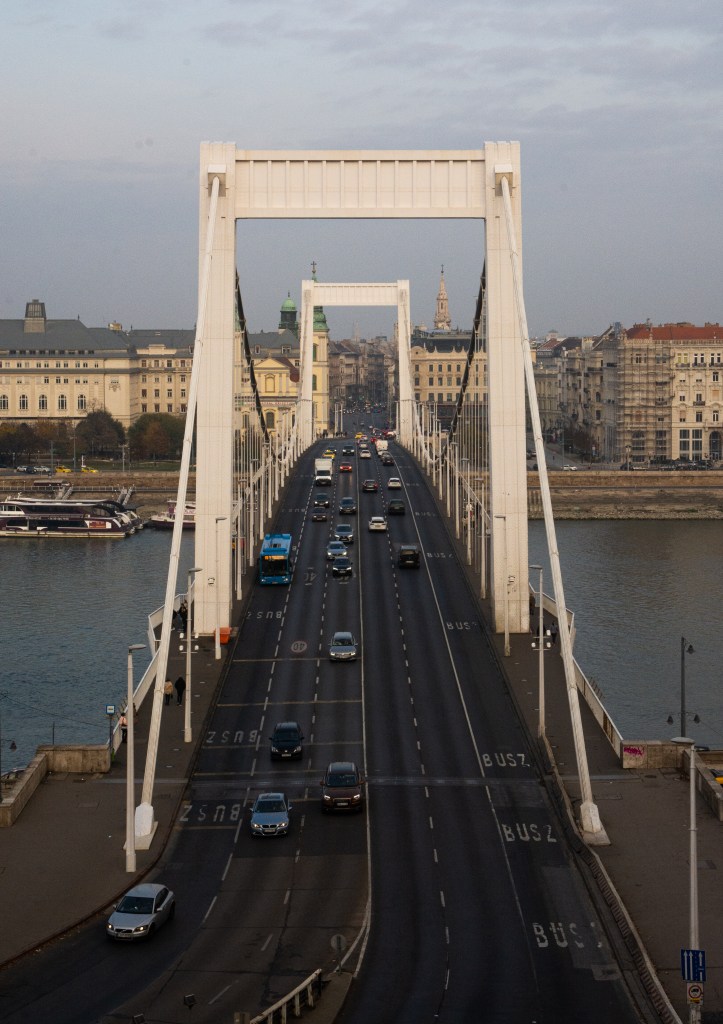
Similarly enough, on a small trip to Budapest, I felt this same sense of uneasiness. Let me explain.

My trip to Hungary was the first place I’d been in awhile where I didn’t know a single person from the country. It was probably the first time I had just booked tickets and a hostel and not even looked up anything about the culture or places to go, and my vague sense of the Parliament building and the Halászbástya (Fisherman’s Bastion) were really the only things that guided me.

Now, this could easily turn into a lesson as to why you should do your research before going somewhere, but I wanted to see what it was like just being an absolute tourist. So I followed the lists of just about every travel blogger labelled “must-dos in Budapest”.

I usually champion ethical and mindful travelling, and the short visit to Budapest left me even more convinced that tourism is the same as going on a chocolate factory tour: the reality is that you don’t see the reality. You may come away with epic photos of some beautiful places, but could you really say you experienced the factory? Or did you see pretty things that only partially resemble the history, culture and life in that country?

During my visit in Hungary, I got to spend the weekend with an old friend, and our weekend was encapsulated in the complete lack of knowledge of country. And I can assure you, that even after having been there, I still know very little about the country. How on earth is that possible?

For one, we didn’t talk to anyone and we didn’t visit any museums. We intended too, but the pandemic situation was not playing out in our favour, so most of what we got to do involved food or the great [cold] outdoors. There were a few occasions to see the free exhibits at Buda Castle or learn about the political history outside the Museum of Terror, but even if museums were the way to learn about the country, is that really the best way of getting to know a country?

Don’t get me wrong– we got to see a good amount, tried gulyás (goulash), ate a kürtöskalács (chimney cake), and did most of the things listed on the “must-do” lists across the internet. Because of COVID, the spa pools were not super feasible, but we checked the boxes that the internet told us to check.

But I am still unsatisfied.

I think these lists and highly edited photos are misleading. You can expect being surrounded by every man and his dog who read the first search engine result, you won’t actually experience the local culture, and unless you’re willing to stop a stranger and ask them about their life, you certainly won’t actually learn about the people who live there.

I wish I had taken a moment to stop shoving my camera around Budapest and actually said hello to the people around me. There are a number of questions I still have for Hungarians: Why do men of all ages seem to walk around in big groups but women often go around alone? Why are there so many male barber shops in Budapest? Why are hot pools so central to the culture? Why does it feel like everyone speaks English but no one speaks English? Does it offend you when I try to learn your language?

Perhaps the biggest mistake we make when travelling abroad is not interacting with the people around us. We’re happy to stay in our bubbles of checking off must-sees, and we forget that these places host real people with real lives. I know from experience that it can be awkward and weird to just start chatting to the person taking a picture of the same thing as you, or the person at the table next to you. But it’ll show you much more than walking around a building will.

I can assure you that I will not be repeating that ignorant sightseeing tour I did of Budapest. Remember the singing cows of the Hershey’s Chocolate Factory? I don’t want to see that. I don’t want to see the glamourised tourist traps which offer little insight into the country. It’s a bit daunting, but I want to know what an actual factory looks like. How does it run? Who does what? The same goes for every city, country and landscape. I want to get to know what’s really there. I want to know the people that run the factory, the people that make up the populations.

So this is my proposition: don’t leave a place you’ve visited until you have met someone from there. Ask them about their life. Ask them what it’s like living in that country. Ask them what they love, what they hate.

Maybe we need to break out of our individualistic, insular minds. Whatever it takes, no matter how uncomfortable, it’s worth a shot. Go get to know the real factory, mess and all.

What they don’t tell you

Moving abroad is hard. There’s no way around that fact, yet deep in the recesses of my brain, I can’t seem to shake my expections of fluidity and ease.

What a ridiculous thought.

Fluidity? Ease? Like lava flowing down a hill, the reality is that problems come in a barrelling flow and my mistakes just make it easier for that flow to pick up speed.

Just recently, the tiniest, most mundane thing momentarily broke my resilience. It had been a measly 10 days since moving to Edinburgh, and while things could have consistently gone worse, they weren’t always ideal either. At this point I was still unable to pay my half of the bills and rent, so my flatmate had to make up for my bank woes. I’ve ended up paying triple what I should have on the bus one day and watched a man bite off his dead nail on said bus. I won’t describe all the issues I have faced, but just take my word for it, things could be going a bit better.

One of the most awkward things about moving abroad is your whole living situation. Maybe you’ve done things similarly your whole life or maybe you’ve been able to see different ways of living, but regardless, living with people from other cultures can be rocky. I’m a frugal kiwi at heart, but there are some things I won’t skimp on, for the sake of serving my flatmates and making it a more welcoming environment. For example, I like to refill the kettle with a good amount of water so that the next person (me or other flatties) can enjoy the ease of rocking up and just clicking a button.

I guess that wastes too much power here. I was informed it’d be better to only fill up the kettle with what you need, because turning it on will save some power. Fair enough. I just wanted to be nice, but I’m totally fine with adapting.

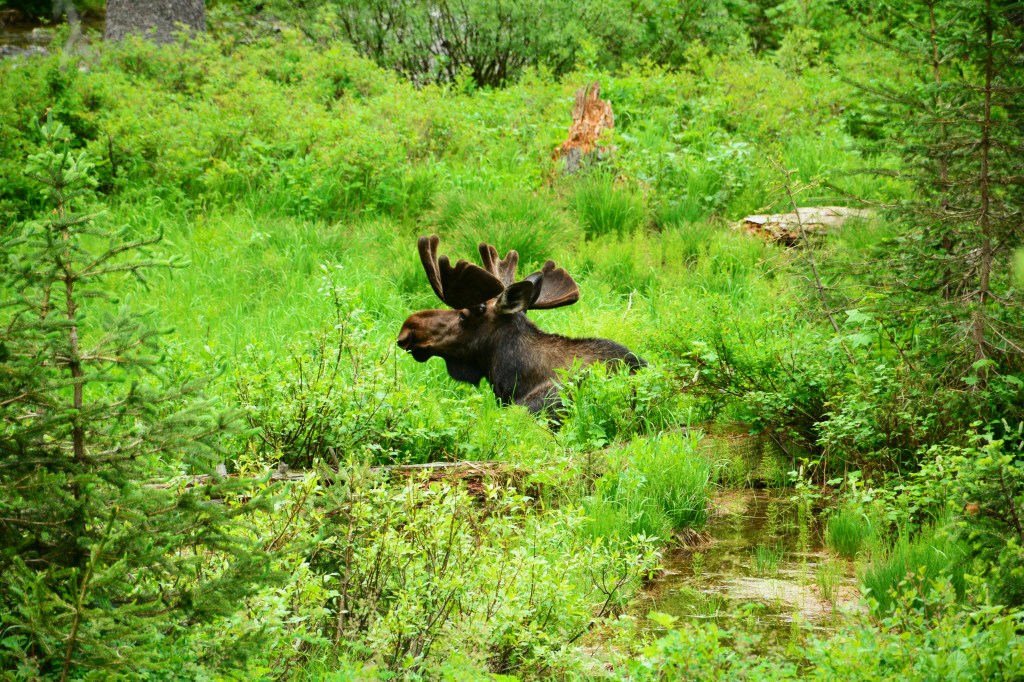
Living abroad is like being a moose. You’re lonely, misunderstood, and there are a lot of assumptions as to who you are. 😉

You’d think the fact that I’ve lived with people all over the world and that having flatmates boil their eggs in the kettle would bother me more. You’d think not having a bank account for the first two weeks in a country would bother me. You’d think spending oodles of money with no income would bother me.

But no, the kettle situation made me cry. For the first time in quite awhile, I broke. And at such a trivial and normally unimportant thing.

Cerebrally, I could tell you that I know it was a build up of emotions throughout the whole leaving and arriving process. Or that I was surmounting a steep learning curve. But I think the reality is a bit more complex than that.

You see, I like to be right. I like to be in the know. I like to do things the right way, and normally a quite economical and logical way. So the idea that I might be doing things the wrong way, even if it’s subjective, that offends me. You could link that my sometimes rampant in(un?)teachability, sure, but it’s all wrapped up in pride.

There is nothing like moving abroad that can humble you to your very core. You know nothing. You often know no one. You do things “wrong” according to the locals, and you will never say things “right”.

I find travelling, living, and working in other Western countries to often come with a bit more baggage than experiences in radically different countries. I come to places like the US, New Zealand, and now the UK with weird expectations that are rarely met. When you arrive in a place that looks like and even feels like what’s familiar, it seems a bit harder to let go of what you’re used to. Maybe the way you cook or when you eat is considered “bad”. Maybe you don’t have enough differences to be considered exotic enough to be given a “pass”, so you’re criticised or teased instead. I think when people move to a dramatically different place, they leave with the expectation they will be met with weird and uncomfortable experiences. But me? Perhaps in my folly I left with the expectation that the UK would be similar to New Zealand. That I’d be able to do my dishes the same way, or that I could live a similar lifestyle.

But the reality is, one should expect wherever they move to be totally different. I hope you don’t expect criticism and mockery, but you will be teased a little bit. Especially if you look like the people you live with.

I’m still figuring things out, and I still don’t understand why Great Britain uses so much plastic, but I’m trying to adapt.

I will endeavour to only put the kettle on at appropriate times, and especially to adapt to a different way of living. It’s not that it’s a necessarily better way of living, but it seems that as a global phenomenon we like people to do things the way we do them. You don’t have to do as the Romans do in Rome, but for the sake of loving the locals, I can adapt.

When trust doesn’t seem to make sense

Peace be still, say the word and I will

Set my feet upon the sea

Till I’m dancing in the deep

Oh peace be still, You are here so it is well

Even when my eyes can’t see

I will trust the voice that speaks

Peace

“Peace be Still”, the Belonging Co. & Lauren Daigle

Peace has overcome my heart so worry never can

Hope has taken back that space disappointment had

I believe your promises above my circumstance

Fear could never conquer me cause You already have

All the way through the night, you’ve got armies of angels assigned to my life

I’ve got nothing to fear

I surrender the fight, to the One who is greater, right here by my side

I’ve got nothing to fear

“Already Have”, Kim Walker-Smith

Growing up in church, I’ve probably read through the gospels a dozen times. Don’t mistake this for some claim to piety because every time I go through a gospel, it feels like I’m reading it for the first time. Every parable, every word Jesus spoke, every miracle He performed leaves me breathless and absolutely amazed. To have God made flesh in physical presence seems like quite literally the most amazing thing in the world. No wonder Jesus said the disciples couldn’t fast with the bridegroom in their presence. How could you fast when you only had reason to celebrate? 

Going back to the gospel of Luke, I love looking at the recorded human responses to Jesus. As I dwelled on Luke 5, where Jesus called the first disciples, I was once again struck at Simon’s response when Jesus told him to let down his nets for a catch. Now, Simon and the other fishermen had been out all night trying to catch fish. With no luck, there’s no doubt they were utterly hopeless. So when Jesus told Simon to let down the nets for a catch, Simon told Jesus just that. They had toiled all night and took nothing. But despite the useless exhaustion, disappointment and failure, Simon didn’t tell Jesus “We already exhausted ourselves to no success, I’m not trying that again.” Instead, he said, “But at your word I will let down the nets” (Luke 5:5b). 

I doubt Simon lacked a trust in Jesus. To me, it seems that because of the hours of seemingly pointless toiling, Simon and the other men were left demoralised and downcast. Who wouldn’t feel that way? Simon told Jesus, “This didn’t work before”, but rightly followed that up with “But because of what I know about you Jesus, I will do it.” Maybe Simon was just humouring the guy, maybe he fully knew Jesus would manufacture some hoard of fish. Either way, what’s striking is that Simon said he would do it simply because Jesus said to. It didn’t make sense to recast the nets, especially since hours of doing that failed before, but because this guy said to, Simon was going to do it again. 

And what a turnout. Jesus didn’t just let a few fish swing along, He provided such a big catch that the boats started to sink under the weight of all the fish. Humbled, Simon Peter threw himself at Jesus’ feet. He knew his station, and he knew Jesus’.

In my own life, I know what an intense struggle it is to trust Jesus when all my past experiences tell me it won’t work this time. But like Simon, I want to be able to look Jesus in the eye and tell Him, My past and all the pain, struggle and hopeless failures tell me that this time will be the exact same. But this time, Master, if you say it, all that will not be so. You can make it into a redeemed victory. All you have to do is say the word. I believe.

I don’t deserve to be able to catch any fish. I know I’ve fallen short, and always will. I tend towards doubt, a sad reality which corrodes my relationship with God. But when I poise my heart in an attitude of belief, an attitude of if you say it, it will happen, my whole life seems flipped. The past failures become redundant. A new outlook of hope is birthed. All because the direction of my mindset originated from a place far different than my default. Yet I’m convicted to remember that if He does decide to answer my prayer, I become a miracle witnesser. And if He doesn’t, I am still a humbled servant who knows where to look to. 
It often feels like God is trying to teach me the exact same lesson time and time again. Apparently my skull is too thick to actually learn its lesson, because the cycle of injury, anxiety and doubt is still my default. But every single time, God shows me that He is in control and that really, truly, I have no reason to fear. So this time, as I run and deal with these nagging pains, I am looking Christ straight on and saying: Not this time. This time, I will not look back to my history of pain. This time I am looking to you. This time, I believe.

Take care of yourself

My therapist once said to me in full confidence, “You are going to be a strong, independent leader who is well educated and takes care of herself.” His encouragement stuck with me so much that I immediately wrote it down and tried to declare it over myself. In the moment, I was at a low in terms of self esteem and belief in what God was doing in my life. The counsellor’s assurance of the veracity of this statement was beautiful, but I struggled to see how that could be true when I could barely lift myself off the floor at times. 

Strong, independent and well educated are things I know how to strive after. Our world seems to revolve around the pursuit of making ourselves known by these terms. But taking care of myself is a bit of a foreign concept for me. 

For a long time, I thought that in order to be the Lord’s hands and feet, I had to completely sacrifice my own health and well-being for others. I’ve lived much of life with my mental and physical health being fairly compromised, so I thought in God’s kingdom, self-care just didn’t come into the equation, or in the very least we just have to suck it up. 

I don’t think it’s entirely untrue that we have to lay down our own comfort to serve others, but there is obviously a point where this becomes unhealthy and detrimental to the Kingdom of God. 

Throughout the trauma therapy process, I spend much of my mental energy thinking about the past. I think about what I could have done in the accident in Uganda, why I was spared when so many others passed, why God let such horrific things happen. Knowing that there is so much pain in life is something I have no problem dealing with personally, but when others experience it, my heart breaks. How could God let these things happen? How could He just stand by as death enveloped so many? 

When I find myself digging myself deeper and deeper into these questions, I’m often reminded of my therapist’s word of encouragement. I have no doubt that God could use my experiences to make something of my tattered life, but take care of myself? How could I take care of myself when others didn’t get a second chance at life? When I get to move on and they lay wasting in the ground? Why do I get to take care of myself when so many others don’t even get the chance to survive? It feels disrespectful and belittling to not dwell on the faces of the people I watch die. 

These questions never really leave my psyche, and frankly doubting is exhausting. But this is the conviction I have come to be able to articulate: doubting His plan and His providence is not the life that we were designed for. And that exhausting doubt certainly doesn’t fit into the God-prescribed self-care routine. Not trusting the glory that God is working erodes the relationship between Him and me. As I seek to hold onto all the images and pains of the past, I am reminded of what taking care of myself looks like. It doesn’t mean I can just drop the struggles of post-traumatic stress. Taking care of myself means choosing joy. It means looking to God instead of looking at my past. Taking care of myself looks like being overcome with gratitude instead of overcome with the thought of global pain and evil. With every evil thing I see and recall, it is my duty and pleasure to see the goodness that God brings. With all the darkness around and inside me, taking care of myself means dwelling on the evermore bountiful light. 

It’s far too easy to get bogged down by the pain I’ve witnessed. The evil in the world. The suffering that pervades so many communities. The darkness around every corner. But with every panic attack and flashback, I’ve found it helpful to remember the various things I am equally able to witness. The cross-cultural, life-giving, community-connecting joys of the world, like food, coffee and chocolate. But also the beauty we see all around us. The immense glory that is every sunset and sunrise. The vast intensity of the ocean. The immeasurable beauty of every species of animal. The daunting concentration of the rainforest. The intriguing majesty of every mountain. Nature is more than just beautiful, it is mind-bogglingly incredible. What is even more incredible is the loveliness that is human connection. The bond of two neighbours, the pleasant interactions between strangers. Human ingenuity is astounding. Culture is astounding. Love is provoking. 

Dwelling on these things puts my heart into a much different position. I’m poised to view things much differently. I’m not saying that looking at the world glass-half-full is inherently better, but it certainly makes my day to day life a whole lot more liveable.

Learning to Rest

After about three weeks home after graduating university and spending about a week healing from my bike accident, I was determined to find myself a job. Since getting a field-related job to put on my resume was one of the main purposes of spending a gap year at home, a global pandemic and being hit by a car would by no means slow me down. I had the idea that a job would once again distract me from the triggers and general woes of PTSD, and interviewing for jobs (via Zoom) was fun and a great distraction. I was slowly getting back to it, meaning that running and general training were coming back slowly and I convinced myself that it was time to get moving. A month or so later I received a job offer from the YMCA as a COVID-19 relief teacher, where I would be spending my days helping at-risk middle school children with their online classes and provide extracurricular activities and lessons. This was my dream gap year job, especially because its hours would allow me to run and train under my new coach. I initially had to delay starting because my nose and chin injuries couldn’t withstand wearing a mask for more than about twenty minutes, so when the pain subsided, I set up a time to start my orientation at the YMCA. 

Meanwhile, I had been slowly dealing with an increasing number of panic attacks, nightmares and flashbacks not to the bike accident a couple months prior, but to the accident back in Uganda. The faces of those I saw perish haunted my dreams and all of a sudden I could be transplanted back in time and unable to return to the present. I tried to ignore the smells of rotting flesh or overwhelming inadequacy, but the constant battle in my head manifested into a downgrading mind and body. As my aches in my body revealed the internal turmoil, anxiety and fear took over my daily walk. I kept trying to convince myself it would just get better with distraction, but the final straw came about ten minutes into orientation at my new job. 

The lovely administrator asked me about the accident and how I was fairing, and she enquired about a certificate from a psychiatrist. I told her I hadn’t received an evaluation, but that I would be seeking one soon. In the most gentle way possible, she informed me I could not start work until receiving a medical psychiatric certificate in order to start work. With a smile and hope that it would only take a few weeks to obtain, the administrator sent me home and told me to look after myself. 

I realise now that a long-term PTSD diagnosis might scare some people. To be fair, many people who do suffer from post-traumatic stress indeed show signs of aggression, anger, reclusivity and depression. If I did fit that stereotype, working with at risk kids would most definitely be inappropriate. Any liability for working with kids must be avoided, so in a very low state of anxiety and depression, I finally enlisted my mum’s help for getting the ball rolling. I first saw a number of pre-screening counsellors, who eventually secured me with a clinical psychologist for ongoing therapy. It took longer than I expected, but I was also sent to a psychiatric doctor to whom I explained my need to get the work-granting certificate. 

This doctor was not keen on me starting work. With as much gentility as the administrator who sent me home, this doctor articulated a lack of confidence that I was genuinely okay. For now, he wouldn’t grant me a medical certificate to return to work and continued to book me in for a follow up almost four months later. With instructions to talk to my lawyer about recompensation from the settlement, and perhaps applying for disability, the doctor left me with an encouragement to really work on resting and healing. 

I do not rest well. 

Healing? I’m a champ at. My body has had to hurdle over high mountains to be able to heal each and every complicated injury, but resting is something I have struggled with my whole life. I’m learning a lot about what resting means. I hear it requires a lot of humility, but sometimes it just feels humiliating. 

Rest isn’t easy, but it has always been key to better performance and decrease the chance of injury or burnout as a middle distance runner. It has required me to set aside what I think is necessary to succeed. To just be. To pause the commotion and intensity, and instead put my intense focus on building up. 

Upon completion of my undergraduate years and then in a time of being unable to work, I’ve really struggled to make the connection from my rest from training and my rest from my other jobs and roles in life. Learning to pause while I heal feels like mental gymnastics. 

Similarly, I have no doubt that the Jubilee Year in the Bible required a lot of faith and testing of the heart. After seven years of working, there were likely some (like me) who didn’t know how to not go out and harvest the fields. I’m sure questions like How will we eat? and How will we provide for our family? surfaced. The idea that they had to have stored up enough to not work for a whole year seems like a big jump of faith to me, and for my whole life I’ve lived by this lack of faith. I instinctively view both my training and work as something I need to be “on” for, 24/7. Taking a rest day, let alone a season or year seems like too much for me. Just imagine–how much could I get done in the same time as that rest? What about all the fitness I could gain, money I could make, people I could save in that time?

Oof.

As if I’m the one who saves a person or makes my body be able to rebuild itself. As if I got the job on my own in the first place. How could I let my view of success cloud my ability to see God? How could I continue to break myself down, physically and mentally, in the name of health? 

For a number of years now, I have only been able to sustain healthy training if I take a day of no labourious physical activity. Perhaps I’ll go for a light walk, but mostly I try to not think about anything running related in order to keep my mind balanced and ready for the training to come. Some weeks I really look forward to my rest days. But most weeks, I dread taking a full day off training, even thought I know I would run myself into the ground otherwise. The seasons of injury taught me that I can do a whole lot more if I take a full day off to focus on sleeping as much as possible and doing as little as possible. This weekly ritual is honestly life-giving.

Logically, that doesn’t always seem to make sense. But to God, who understands the way my every cell and fibre work, it makes perfect sense. Of course I would take a day off training, because then I could push harder on anything from track sessions to long runs. 

It took me a long time to admit I needed a weekly day of rest. On the days when I am internally kicking and screaming, I have to press harder into God’s commandment to rest. To rest means to pause the hard work and know that I will reap even more benefits if I stop. 

I’m trying to have this view as I walk through a season of forced rest from school and work. My plans and my ideas of what a successful trajectory looks like are crumbling before me. As I get to be a full-time athlete, I feel I am quietly learning more about God than in my busy, “normal” season when I thought I was doing God’s work. But while unable to work or act or even socialise, I am put in a position of full surrender. And when I am on the floor, forehead pressed to the ground, there’s not a lot I can see. But I can see what is right in front of me.

What is right in front of you is exactly where God has called you. That is where He wants you. Here, your attention can only be on what is in front of you. Because you cannot look to what’s ahead, you have to trust God. You have to know that even though you feel humbled and humiliated, you can still rely on His goodness and sovereignty. 

So while I spend my days learning to trust the Lord with my entire being, I am once again drawn back to the Māori term Whakapono. Trust God. Put your full faith in Him. It means knowing that I can trust God, even through the doubt and waves. I know that He is Lord through it all. I know that He will use every season and experience for His work and His glory. Time to reset. 

He’s not punishing me. He’s building up my fibres. He’s repairing the broken bits and the things that weren’t working so well. He’s doing some major physiotherapy on my heart and mind as He re-wires me to function better. I rest and fight to believe that I will be okay throughout a season that doesn’t match what I think is going to propel me forward. I have to recall that God’s kingdom is a reverse economy where the weak are strong and the poor are rich. It won’t always make sense, but if I press into this counterintuitive thinking, it might just lead to an incredible breakthrough. 

“He gives you both the grace and the power to do what He calls you to do. He puts it on your heart and gives you the power to do it.” So too, will He give you the power to to rest.

Maia’s garage rat

For a couple of years Maia had an intense fear of going into our home garage. We have a door that opens from the office into the garage, where the laundry, extra refrigerator and extra cleaning and toilet paper supplies are. As an eleven year old, Maia was already doing her own laundry and replacing her own toilet paper for many years, but while I was away at university, Maia started to adamantly refuse to enter the garage. 

Now, we have dealt with rats coming into our garage ever since the neighbourhood cat died. We live close to the foothills and many neighbours also deal with similar issues, so setting rat traps and seeing the occasional sneaky guy in our fruit trees is familiar and sort of fun, to me at least. But I guess getting your soccer balls chewed up is not so fun.

Maia, on the other hand, has become absolutely traumatised by the sight and sound of something scurrying in our garage. Every time we smell a strange odour in the garage, we let the dog loose and she quickly finds another suspect caught and killed, but that doesn’t seem to bother Maia as much as the idea of one darting across her path. Perhaps she saw one once and that was enough for her. But now as a “grown up” tween, she makes puppy eyes at whichever person she thinks will most likely go fetch her something out of the garage fridge or replace the toilet rolls for her. Maia will do just about anything to not have to enter the garage, even to the point of offering me some of her birthday money to go in for her. 

When she is forced to go in herself, she props open the door and sings and shouts so loudly that any conversation inside must come to a halt. It first starts with loud complaints of having to go in, but that quickly gives way to an ABBA or Disney soundtrack number. You’ll know if Maia has to go in the garage, and so will the neighbours two or three houses down. 

This is a bit different than how I approached what I feared when I was young. When I feared something, I would quietly observe how others dealt with it and even let out a small scream if it abruptly came near me. But I quickly learned that I didn’t need to fear things if I was in control. So, I often did things that scared me on purpose. I learned to be able to control things, but especially to control my own fear. If it scared me, I would walk with my eyes locked straight ahead and keep going. I decided that it wouldn’t scare me. That way, I was in control. 

When I was on Masaka Road, this meant that when I feared for my life I still kept my head on straight and did what needed to be done. I couldn’t let the surrounding horrors scare me because then I wouldn’t be able to act. Yes, adrenaline played a huge part in that, but there were multiple times when a pause in activity left me wondering if I could dart behind the farthest tree and avoid the whole scene. 

It’s no secret that I like control. After years and years, it would seem that every trial and temptation stems from my desire for control. But as much as I love control, it seems equally true that I let fear control me more often than not. Things that threatened my perceived  control scared me more than anything. But what I still fear most is that God might have a different plan for me than the life I envision. Instead of keeping my head straight and doing what is put in front of me, I loudly protest, and even try to barter with God. I make sure the whole neighbourhood and everyone around me knows my objections to what I am having to do. What kind of counterintuitive behaviour is it that takes over me? 

Life has thrown me some lemons, but God isn’t keen on my obnoxious protests. When Jesus was tempted in the desert, He didn’t clang symbols and tell everyone how much He hated what God was allowing to happen. He kept His eyes locked ahead and told the devil what was what. 

When I am tempted to let fear probe apprehensive behaviour out of me, I hope that I can keep my eyes fixed on the prize. I want to do what is in front of me and do it without fear. 

Maia is slowly learning to overcome her garage fears. Sometimes she even absent mindedly enters into the garage and she’s halfway to the refrigerator before she realises there is a reason she doesn’t normally go in there. She is daily confronted to exchange her fear for faith–faith that even if a rat pops out at her, she’ll be okay. With the reality of how scary that rat must be to her, I hope I can have her faith and courage one day. She inspires me to do what I need to do, and maybe if I have even half her courage, I’ll be able to get a popsicle, too.

Flourishing

“Is not this the fast that I choose: to loose the bonds of wickedness, to undo the straps of the yoke, to let the oppressed go free, and to break every yoke? Is it not to share your bread with the hungry and bring the homeless poor into your house; when you see the naked, to cover him, and not to hide yourself from your own flesh? Then shall your light break forth like the dawn, and your healing shall spring up speedily; your righteousness shall go before you; the glory of the LORD shall be your rear guard. Then you shall call, and the LORD will answer; you shall cry, and he will say, ‘Here I am.’ If you take away the yoke from your mindset, the pointing of the finger, and speaking of wickedness, if you pour yourself out for the hungry and satisfy the desire of the afflicted, then shall your light rise in the darkness and your gloom be as the noonday. And the LORD will guide you continually and satisfy your desire in scorched places and make your bones strong; and you shall be like a watered garden, like a spring of water, whose waters do not fail.” Isaiah 58:6-11

I rose early this gloomy morning to listen to my childhood church’s sermon online, trying to maintain some sort of normalcy amidst the pandemic that is sweeping our world. The pastor  spoke on one of the early chapters of Jeremiah, discussing our need to beg the Holy Spirit to fill us. A few days ago, I poured over Isaiah 55:10-11, I was in absolute awe of God’s analogy for how His word goes forth. Similar to the rains that pour down, watering the earth and bringing forth seed to the sower and bread to the eater, so His word is sent forth and does not return empty. His word accomplishes what He purposes, and succeeds in what He sent it for. The speaker mentioned this verse, that His word shall do as He wills. While slightly encouraged, this was not the main focus of my morning.

While the pastor was exploring the passage, I was inclined to try and figure out which verses he was talking about. He was calling for us to want more of the Spirit, so I flipped to Jeremiah 17 (which was not the passage the speaker was discussing), and read through it. Verses 7 and 8 immediately jumped out at me: “Blessed is the man who trusts in the LORD, whose trust is the LORD. He is like a tree planted by water, that sends out its roots by the stream, and does not fear when heat comes, for its leaves remain green, and is not anxious in the year of drought, for it does not cease to bear fruit.” 

Fast forward to my personal reading for the day, Isaiah 58, and I started to tremble. As I read through verses 6-11, the phrase “If He has willed it, it will happen” started repeating in my mind. The Lord spent chapter 58 correcting His people for fasting for the wrong reasons. God told them what fasting was really for; letting the oppressed go free and sharing bread with the hungry and bringing the homeless into your home. It was about The power of God being made manifest through us, and His light shining through us, bringing healing and righteousness. It is about wrongs being made right. And the glory of the Lord will be our rear guard and the Lord will answer us.

Before moving on to verse 10 and 11, I heard that voice again. If He has willed it, it will come to pass. I asked God for His Spirit. To be filled. For Him to shine through me. For His will to be done in my life. For Him to work, and not me. 

And THEN. As I read verses 10 and 11, I began to tremble. If we pour ourselves out for the needy, then the LORD will satisfy us. He will guide us. He will guide me. He will satisfy my desire. He will make my bones strong. He will make us like a watered garden whose waters do not fail. 

Recently, I have been feeling pretty dry. Not filled. Not able to pour out. Like my studies are useless, like I have no role. When a global pandemic is killing thousands, writing essays from your safe bedroom feels trivial. Watching church from your laptop feels silly and uncomfortable. But I am first and foremost reminded that if HE has willed that, it will happen. He has willed that millions of Christians cannot meet together. But He will speak through the loneliness. He will speak through the dispersed congregation. His Word will be spoken. And His word does not return to Him empty. It will accomplish what he purposes. And it will succeed in the thing for which He sent it. 

In a direct correlation to Jeremiah 17:7-8, Isaiah 58:10-11 gave me a picture of Him who is our living waters. When a plant is watered, it is strong and stands upright. It produces fruit, and even when a drought may come, its roots are grounded in that spring. When its water supply is continuous, it stays stiffly upright and does not wilt. It provides shade and fruit for others to benefit from–because it is strong and well-fed, others can flourish as well. This is the Word of God. When we are filled with His Spirit of Living Waters and with HIS Word, we can pour ourselves out to others, knowing our waters do not fail. We can give our fruit freely, knowing He will supply us more. He will satisfy us, He will guide us. He will provide for us. Like the breath of life He is, He will go before us and behind us, and raise us up to be His hands and feet to provide for others. 

I want to welcome the homeless into my home. I want to share my bread with the hungry. I want to pour into others. I know that is not a calling in life that comes with unconditional joy and ease. It comes with burdens and tears. But the LORD will be my supply. When our roots are embedded in His Word, His well of living waters, we will not run dry. We will not perish in times of drought. We will not wilt. We will stand strong and the Lord will be our rear guard. He will make us a watered garden whose waters do not fail. 

He is our waters that do not fail. He gives life. Plant yourselves next to the stream of Living Waters. You will not only receive life, but you will be sustained and upheld in every season. 

Volunteering in Uganda pt. 1

(Note: this is just a preview into a series of my time volunteering in Uganda)

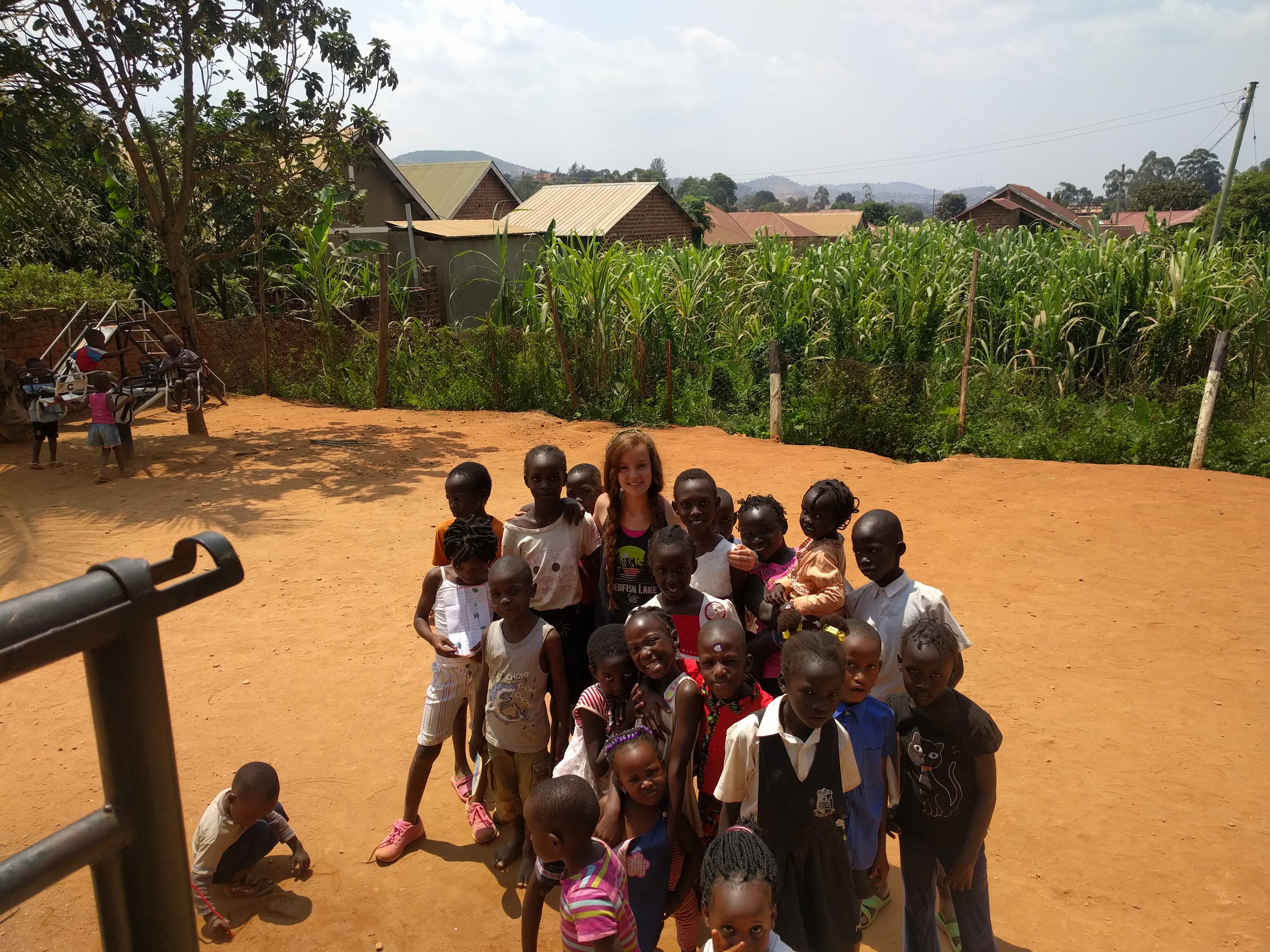
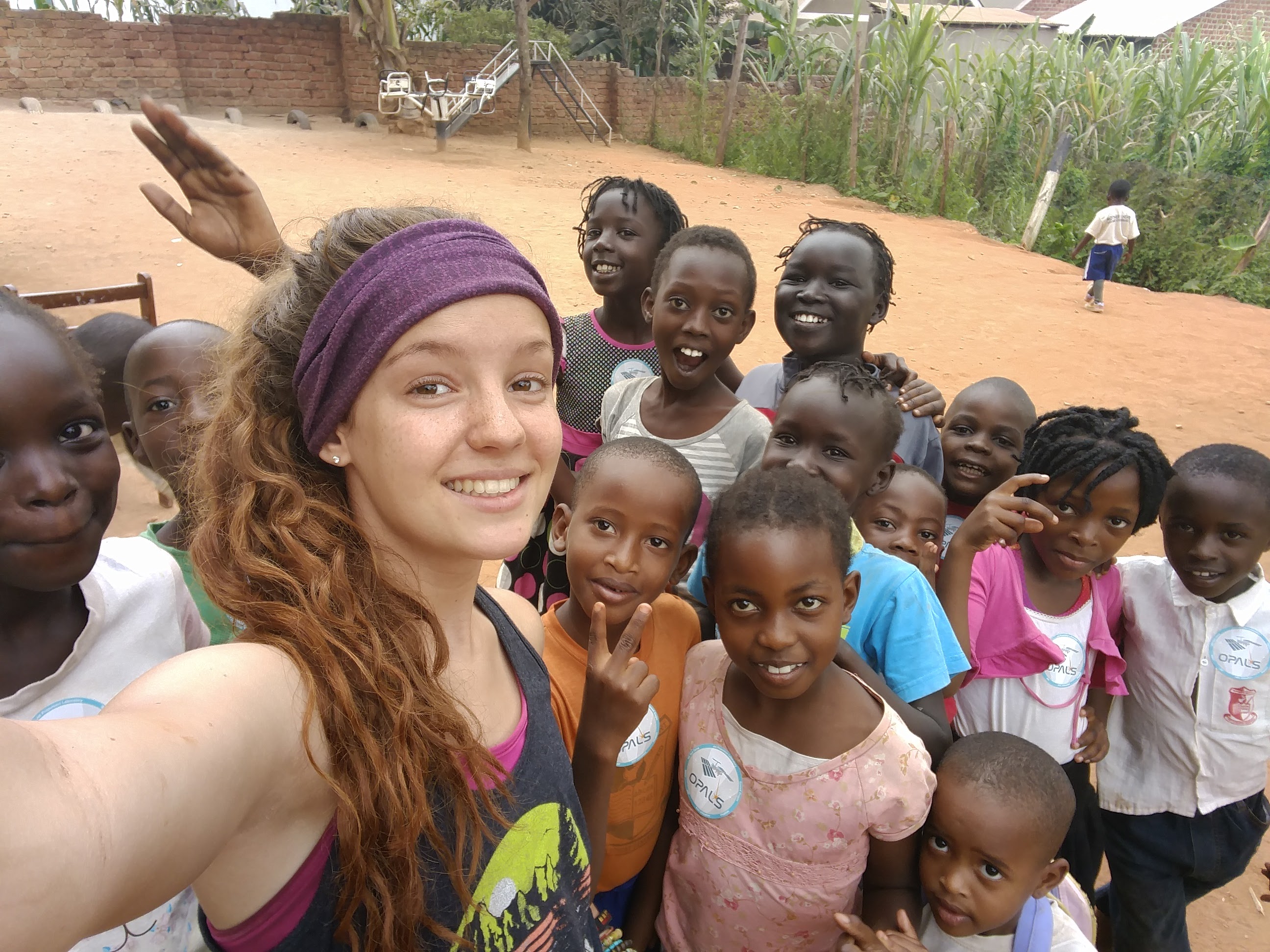
The summer of 2016 I had the pleasure of volunteering with IVHQ Uganda and Volunteers 2 Uganda. Out of the two months I spent in the continent of Africa, six weeks were spent volunteering in Mutungo, a village about forty minutes from the capital, Kampala. I was a teacher at a local private school called Mother’s Heart Day Care and Kindergarten. I drifted between Primary 1, 2, and 3, but mostly taught in Primary 3. These kids, aged 8-11, stole my heart. They are the reason I want to go back to Kajjansi (Kah-jyahn-see), the village my school was out. They were the sweetest, most caring kids I have ever met. Some of the kids were South Sudanese refugees, which gave me a little intro to South Sudanese culture (hint, it’s pretty different from Ugandan culture). I obviously don’t know all that much about the culture, but I loved what I got from the kids and some of the mothers I met.

IMG_20160729_122649_1 (1).jpg(the compound for the itty bitty school)
Anyway, I worked for six weeks (minus the few days I missed out from getting in a huge accident and was in the hospital- a story for another day) and loved SO much of it. Sure, there were hard days, but just one smile could make everything worth it. Cheesy, I know.

Some of the cultural differences made the first week a bit interesting. It was hard getting used to the fact that teachers would whack kids if they even sniffed too loud. A lot of people would say “that’s abuse we need to end that practice in xxx country,” but I talked to some of the locals and even the kids in Primary 3 and their reasoning was pretty logical. It really takes an open mind to understand this cultural practice, so bear with me.

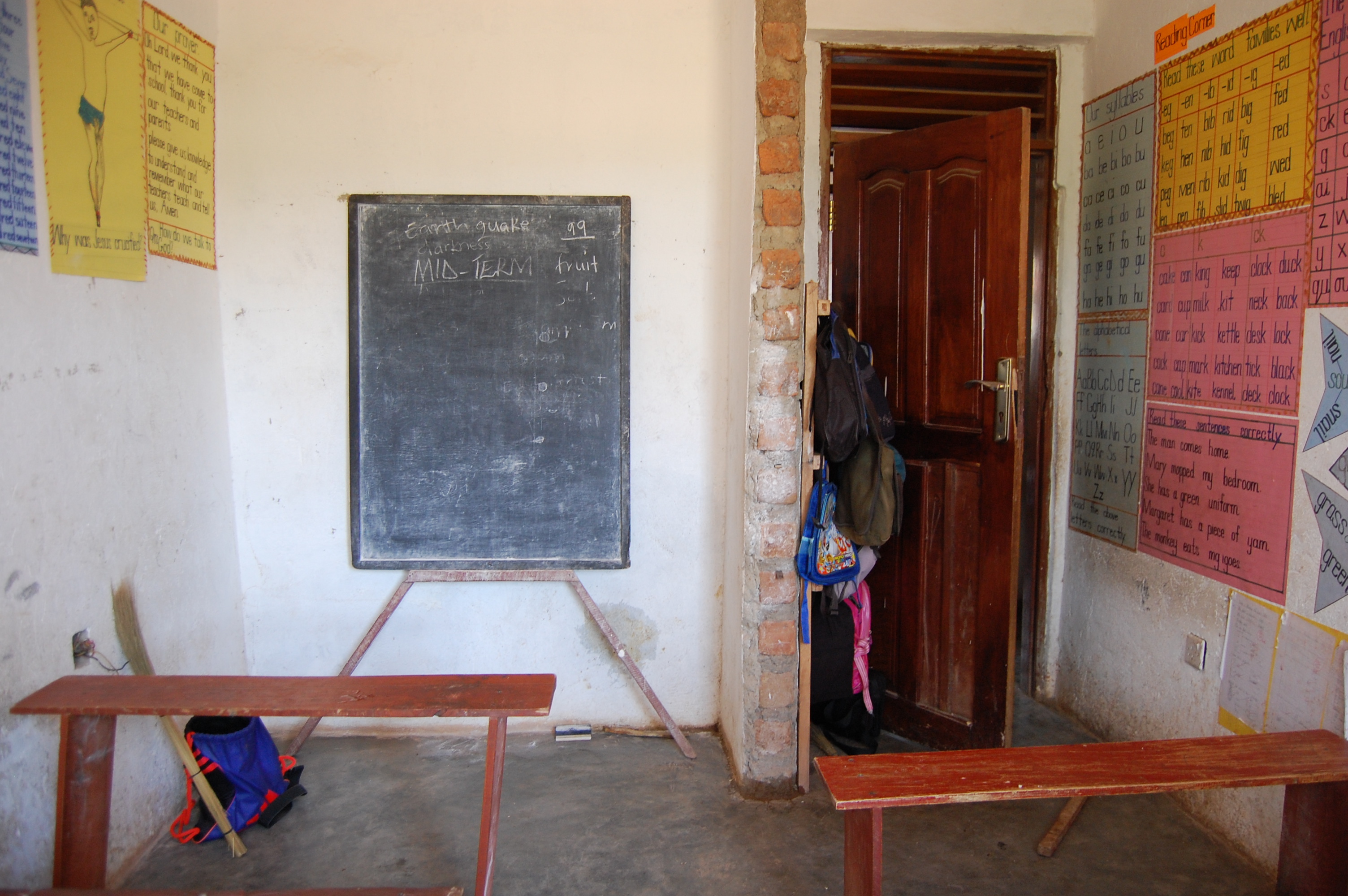
DSC_0808.JPG(Primary 2 classroom)

At one point the kids wouldn’t settle down or stop talking and I couldn’t keep them quiet. So as I was addressing the class, I said, “You guys, why are you talking so much? Your other teachers walk in and you are so quiet I could hear a pin drop. And here you are making all this noise while I’m your teacher! Why? Keep quiet!” One of the older girls responded, “Teacher Haylie, beat the ones who are talking. Cane them and they will listen to you. That is the only way.”

Um no.

I told the kids I would not cane them and I said unless they kept quiet I would go get another teacher.

That worked, sometimes. But the best way I found to keep them quiet was to just make everything interesting. Teachers out there are probably thinking “wow what an amateur.”

From the teachers’ perspectives, they said that is the only way to make them respond. Same with other locals who weren’t teachers, they said it’s the only way.

Now, I don’t want to paint the Ugandan school system in a bad light, so don’t look down on them. This works for them. It’s just different.

Another thing I struggled with while I was teaching at Mother’s Heart was dealing with one specific teacher who fancied me and said he was looking for a mzungu (white person) wife.

Ya no, I was 18.

Anyway he was really pushy and that made it hard.

But it gave Primary 3 a good laugh!

So this teacher liked to talk really close to me (like his face was about 10 inches from my face or closer whenever he talked to me) and I would obviously bend out of the way so he wouldn’t be so close. I avoided talking to him and I didn’t respect his mode of teaching at all. The primary 3 class was old enough that their main teacher would RARELY cane even one kid, but when this teacher came in to teach religious studies or whatever, he was mean. He was a Muslim, and the section of religious studies at the time was on Christianity and let me tell you, he butchered it. So if I was in the room, I’d say something (privately, so as to not undermine him in front of the students) but sometimes the kids, who were mostly Catholic or Christian, would speak up. If they said “Teacher, the Bible does not say that,” he’d cane them. Viciously and excessively. It made me mad. So I talked to the Director and main Primary 3 teacher and I taught religious studies from then on out.

ANYWAY. So back to the main point. This teacher spoke really close to me and would try to put his hand on my shoulder or elbow and I would like duck out of the way or whatever.

So the kids apparently really noticed this and at one point when I was teaching, this teacher walked into the room and tried to talk to me (about 6 inches away) and I like backed up and answered his question and he left. As soon as he shut the door, the kids burst out laughing. I laughed too, mostly because I was confused. One girl said “Teacher Haylie, whenever Teacher xx talks to you, he comes so close!” I laughed so hard, “I know!! What is up with him?” Everyone was laughing at this point and imitating interactions between me and him. Then that teacher walked in and everyone, including myself, completely shut up and looked at the ground. He demanded, “What is all this noise? Who is talking?” and caned a few people then left.  As soon as he left, we all laughed again and went back to work.

I know, probably not a good influence on the kids. I shouldn’t have let the kids make fun of their teacher, I regret that. But at least they noticed my discomfort.

IMG_20160728_114605.jpg

These primary 3 students made it SO hard for me to leave Uganda. They laughed when I laughed and cried when I cried. They tried to dress like me (more loose pants than skirts, for practical reasons). When I dealt with PTSD after my accident, they comforted me. They yelled at other kids who tried to take my camera. They asked my about my family. They were shocked when they learned just how similar my 7 year old sister is to them.

I didn’t go to Africa to see the sights; I didn’t go to Uganda to take photos of its vast beauty. I went to serve the under-served. I went to see if this is the country God wanted me to live in permanently. While I didn’t really feel like this was THE place, I could see myself spending a lot of time in this beautiful country. Uganda has some of the kindest people in the world. Unfortunately, it is also home to the LRA, a rebel army committing some of the most horrific acts of war. I went to Africa to serve even just one person. And I hope as I tell you stories, you will be inspired to go and serve those who have much, much less than you.

DSC_0908.JPG

PS: All photos are mine and copyrighted ©vibrantcorners