Turkey is a beautiful country with rich culture and history and Istanbul, spread over two continents, makes it a sort of “gateway” between worlds. Istanbul is separated by the Bosphorus Strait with the Marmara Sea to the south and the Black Sea to the north. Ruled by Muslims, Christians, Hittites, and many more, Turkey’s history has been both graceful and gruesome. Formerly called Byzantium and then Constantinople, Istanbul used to be a city largely populated by Christians, but now vast majority of Turkish men and women are Muslim. The Muslim culture is conservative and extremely hospitable, and I hope that like me, you get to experience their generosity first hand.
On the European side there is a slightly more modern and touristy feel, while the Asian side is where I found the best food and felt more immersed into the culture. Granted, the European side does have many of the touristy spots, and if you are staying on that side, I recommend spending a day or two wandering around the Asian side and enjoying delicious eats and welcoming locals.
One of the best things you can purchase while in Istanbulsay is the Museum Pass Istanbul. I got my 5-day card while entering the Hagia Sophia, but I’m pretty sure you can get one at any place that is included in the card. It gets you into a number of museums and historical sites for just 85 Turkish Lira (approx USD23 and GBP19) as opposed to paying around 15 lira per place you go. For more info you can look here.
However, peak tourist season is a dread. And Istanbul, being one of the most traveled to cities in the world, is no different. Istanbul’s peak season is the summer, with lots of tourists and travelers alike. People come from all over the world to experience a charming and bustling enormous city.
In attempts to avoid crowds and spend less money, I decided (three weeks in advance) to visit Turkey in the dead of winter. I wasn’t sure what to expect, thinking it could be either a Russian-style winter or a balmy SoCal winter. Well it wasn’t either. It was the perfect type of winter. A few days it snowed, other days there was a slight drizzle, but it was never too cold. There are tons of things to do indoors but the outdoors were enchanting in the snow and cool, bright days.
The only thing that was not so fun was that on the European side: a lot of the walk ways are marble and once the snow started to melt, you had to tread carefully. But besides that, it was amazing, and I’ll show you why.
(warning: I only had my phone for a camera on this trip, so photos are sub-par)
Sultan Ahmed Mosque (aka the Blue Mosque)
This mosque is so popular, and I now know why. It’s incredible. It was a slightly cloudy day, but that just made everything more moody and enchanting.
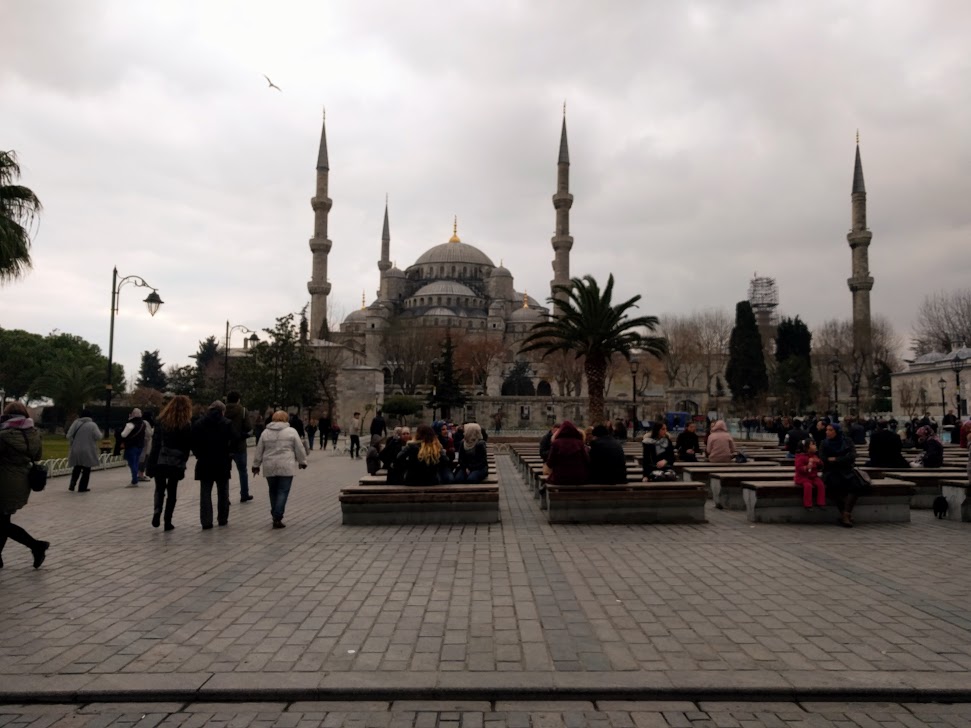
This is the view from Sultanahmet Square. The square separates the Hagia Sophia and the Blue Mosque- it’s a great place to just sit and stare at the majestic, historical buildings.
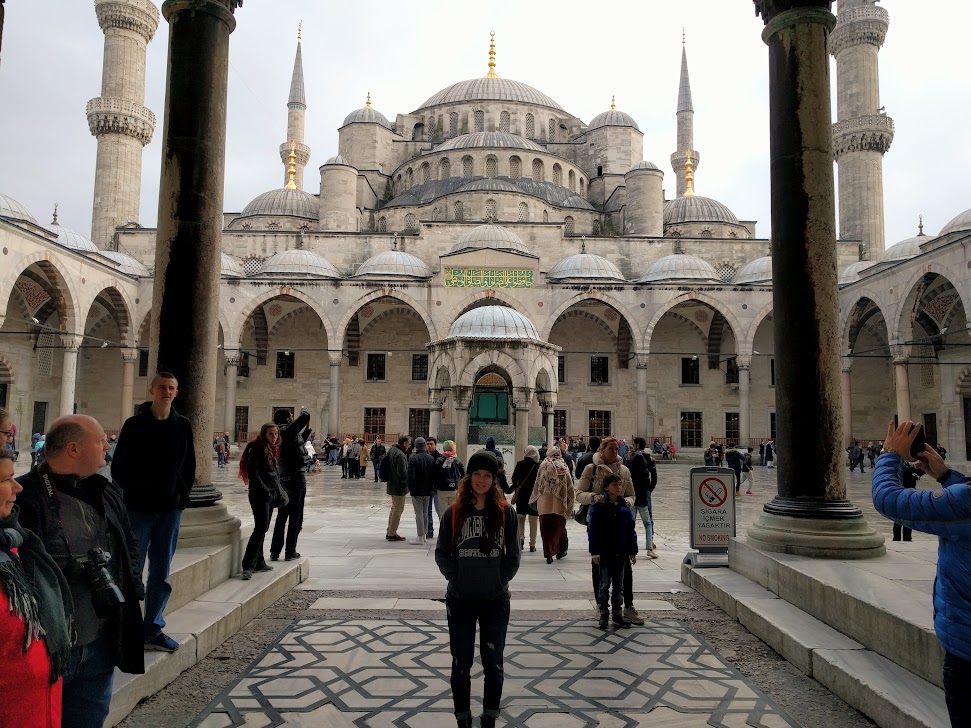
Dark photos, but beautiful nonetheless. This is from the courtyard, and to get inside you have to wait around for a time they’re not doing a prayer and then you go line up. As you walk in, girls have to have their head covered with some scarves and if you are wearing tight pants, they give you a long skirt to wear over. I think I ended up with just the scarf to cover my hair, but my pants were loose enough. So if you’re planning to go inside the Mosque, prepare accordingly.
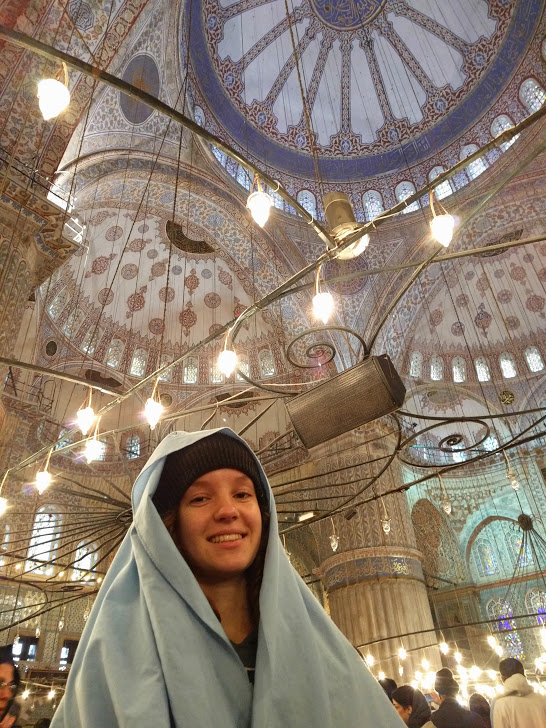
Well that’s flattering.
Keep quiet inside and be respectful, it helps in avoiding the evil eye.
Hagia Sophia
The Hagia Sophia (ah-yah soh-fee-yah) comes with a lot of historical baggage- it’s been rebuilt three times in the exact same location. First it was a Christian church, covered in gold murals and paintings that depicted bible stories and Jesus Christ. Over time it was captured, destroyed, etc and now it is an ancient Christian church that was taken over by Muslims, thus the giant Muslim poster things. Yes, super clear.

There you can see the Hagia Sophia perched up there as we were crossing from the Asian side to the European via ferry. There are three ways to get across the Bosphorus Strait: the ferry, an underground metro, and three bridges (I think).
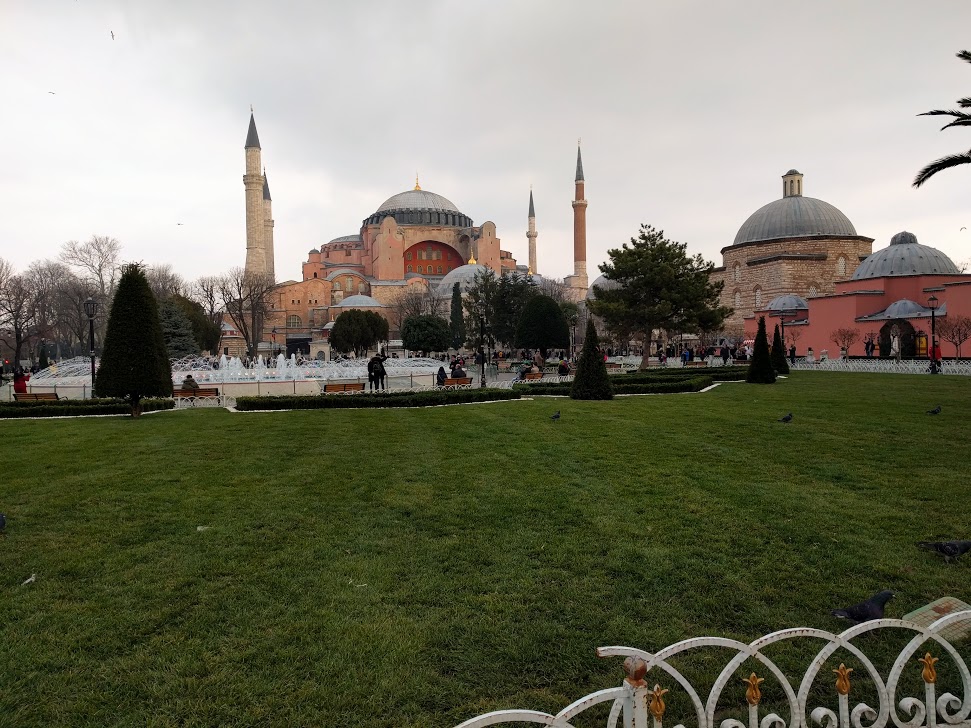
It’s huge, and the fountain in front of it makes it all pretty spectacular.
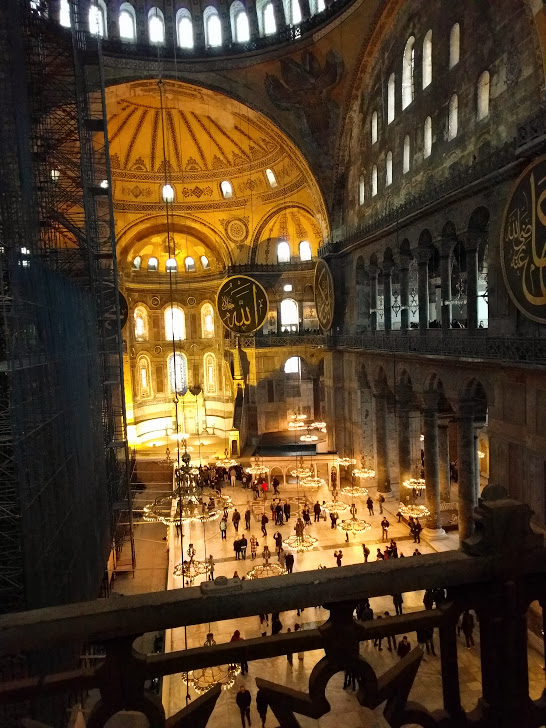
The majority of the inside is covered (or was covered) in gold. I say was covered because much of the gold was scraped off because, well, it’s real gold. Also, those big scaffolding things are there to support and preserve the building.
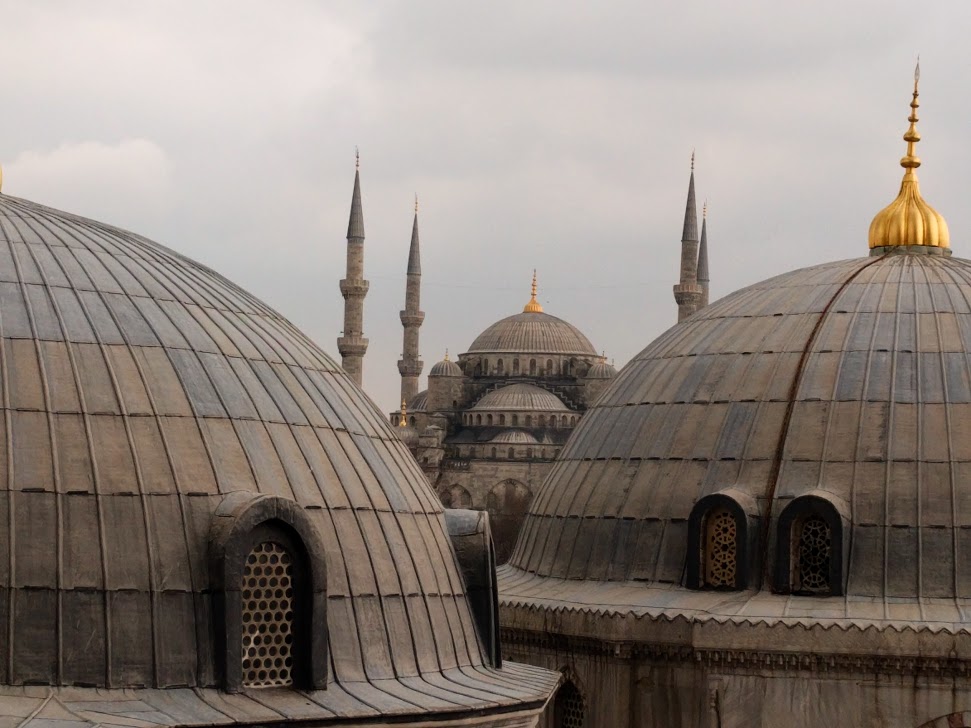
And here’s another photo of the Blue Mosque taken from a small window in the Ayasofya because it’s just so dang pretty. I stuck my hands out the window (which was taller than my head so I couldn’t see what was going on) and precariously took like seven photos. I’d recommend not following suit.
Topkapı Palace
When I saw photos of Topkapı Palace, I wasn’t super impressed. But my friends said it was pretty cool. So we got some Turkish Ice cream (definitely something I recommend) in the snow and went up the slippery, steep path up to the palace. And despite what I previously thought, it was beautiful in the snow.

The outside isn’t that exciting. But it’s cool. Oh, and those marble stones are the types of path ways I was talking about that get so dang slippery in the snow.
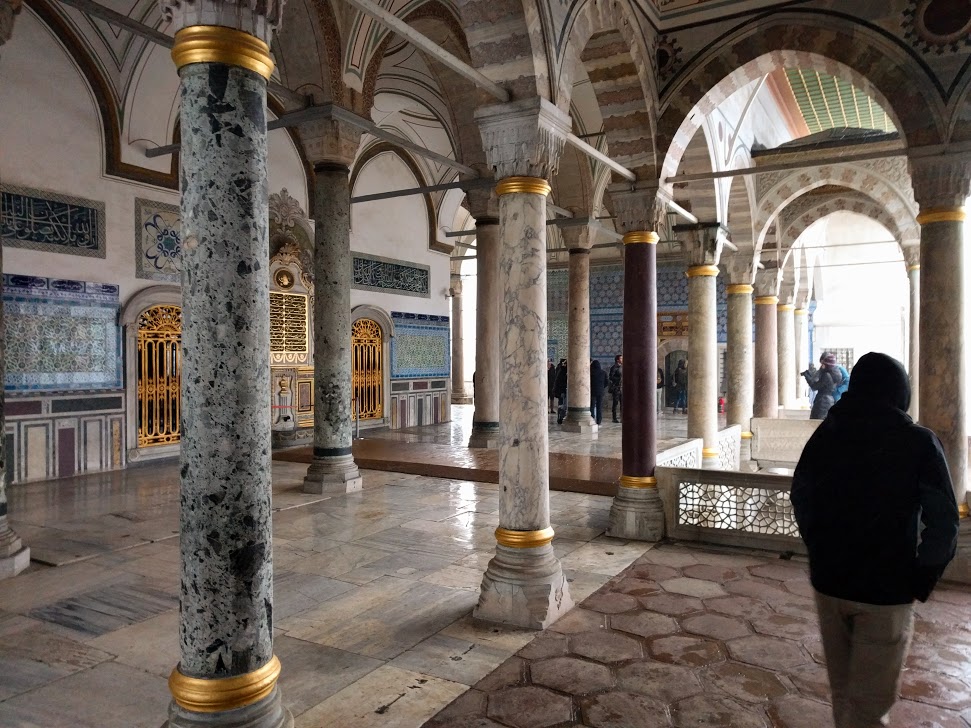
The inside is amazing. The different accents with different colours of marble are priceless and were chosen specifically for the palace. It’s beautiful!
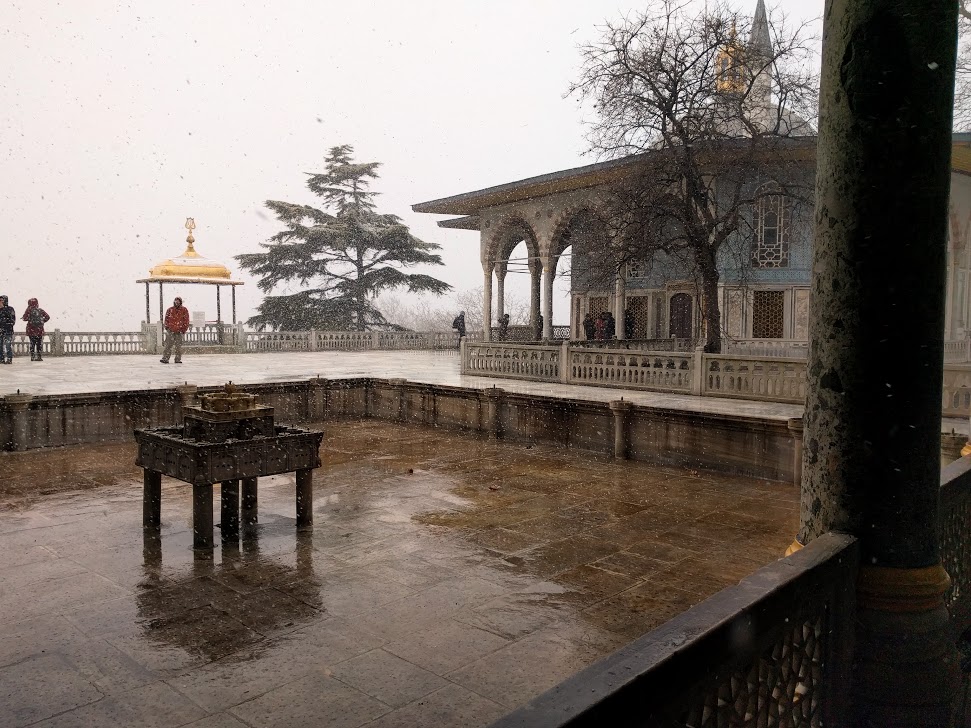
Watching the snow fall (and obviously going out and playing in it) from the walk ways was pretty fantastic. Every detail was so precise. Inside they have viewing galleries of the armory and chinaware and silverware.
Istanbul Archaeology Museum
This museum was pretty cool. Lots of mummies and whatnot, but interesting. However, it was under construction (as of January 2016) and it made it kind of awkward to get in.
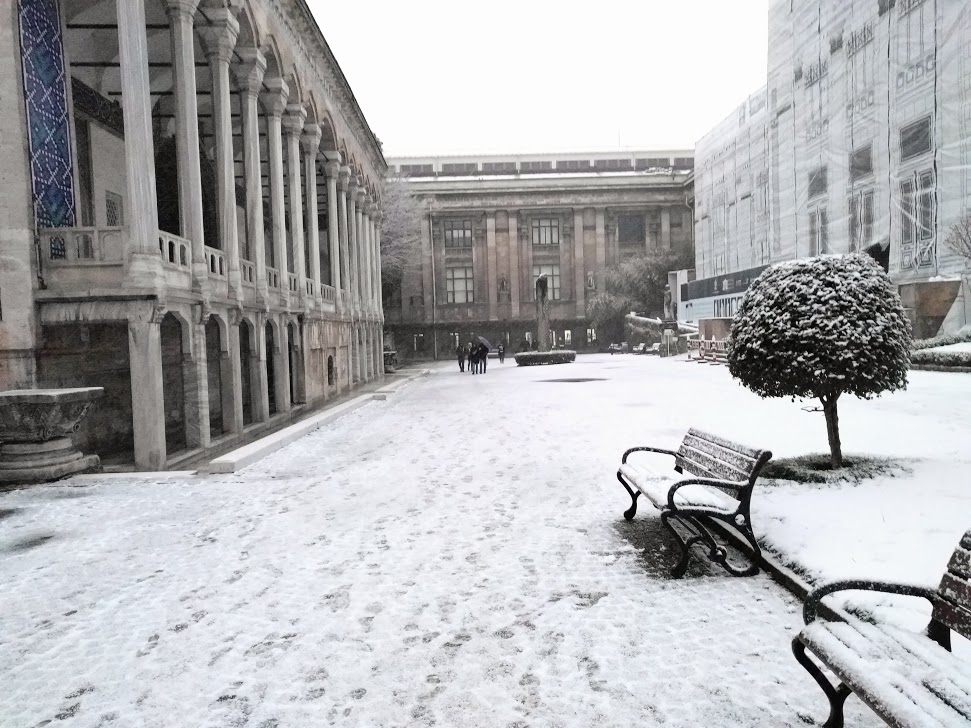
The snow that day was perfect for snowball fights and jumping around and taking cool pictures. The snowflakes were more like little snowball pellets, like little balls? It was weird snow but it made it even more fun.
Chora Church
Another indoor activity, but it only takes a couple of hours at most. It is pretty dark and as of Jan 2016, it was under a lot of construction, so it made it a bit of an expensive two-three room experience. However, I’m sure without construction, it would be brilliant.
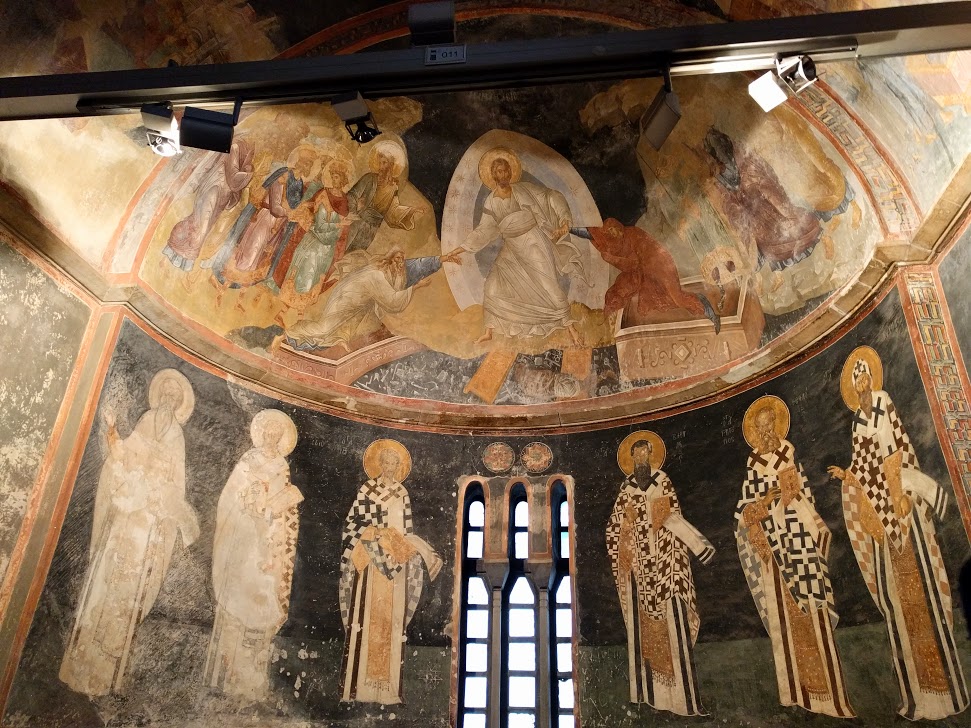
The different mosaics and frescoes portray various Bible stories (of which some of the gold has been stripped off). The reason behind having Bible stories in paintings everywhere was because the poor and even common folk couldn’t read, and thus images were the only ways to tell the stories of the Bible. The above fresco depicts Jesus being pulled by Adam and Eve and below his feet Satan lies defeated. He is surrounded by the Disciples.
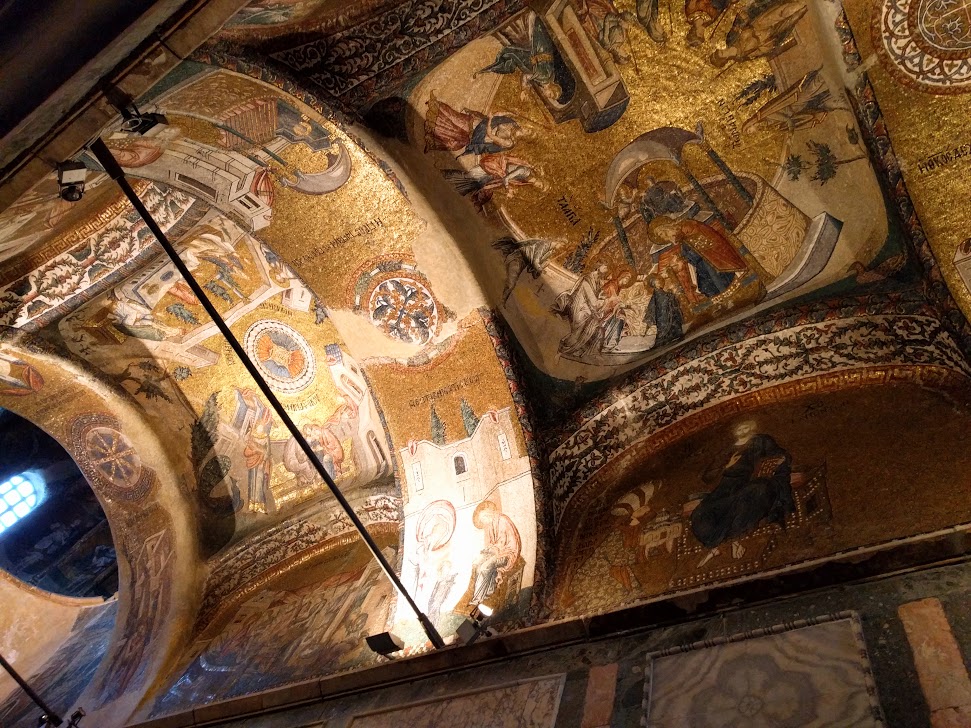
Again, more stories. When you sit there and look closely, some of you can recognise what story it is portraying. Your neck will also be sore after this trip.
I think the Istanbul Museum card works for Chora Museum/Church now, but it didn’t when I went (thus why it was a bit expensive).
Dolmabahçe Palace
Dolmabahçe was one of my favourite things I saw in Istanbul. It was a perfectly beautiful winter day; the sun was bright, the snow was laid neatly down, the palace was incredible. It wasn’t included on the Museum Pass Istanbul, but it was worth the 30 lira or so. The tour is included, and it’s also wonderful.
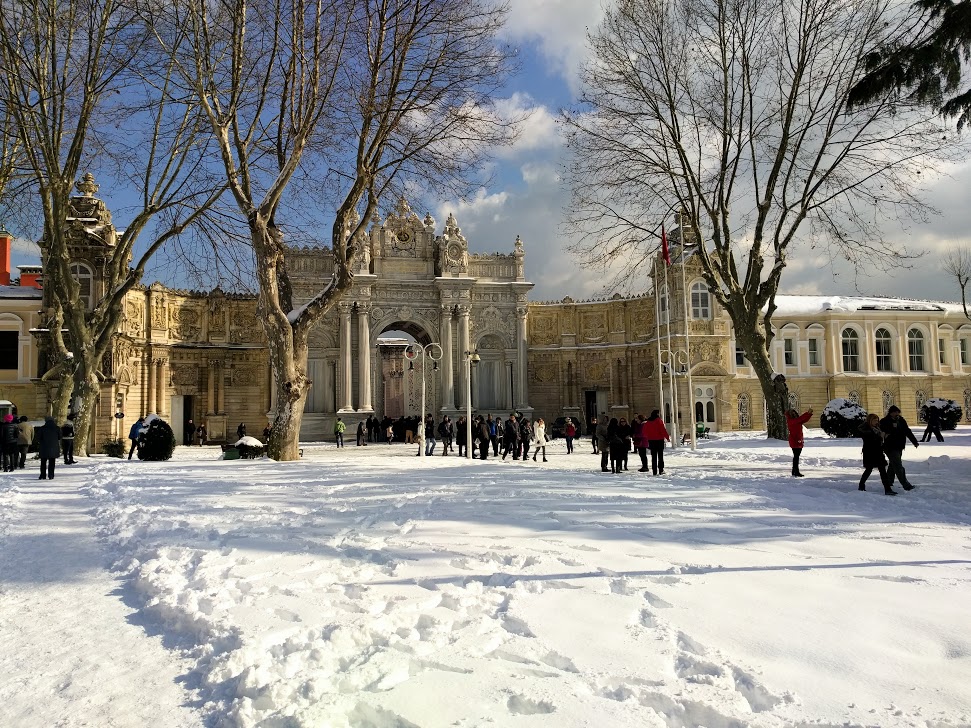
The palace is surrounded by these big, gorgeous walls and gates. It was generally used by princesses to come live by the sea (oh, by the way, it’s right on the strait),
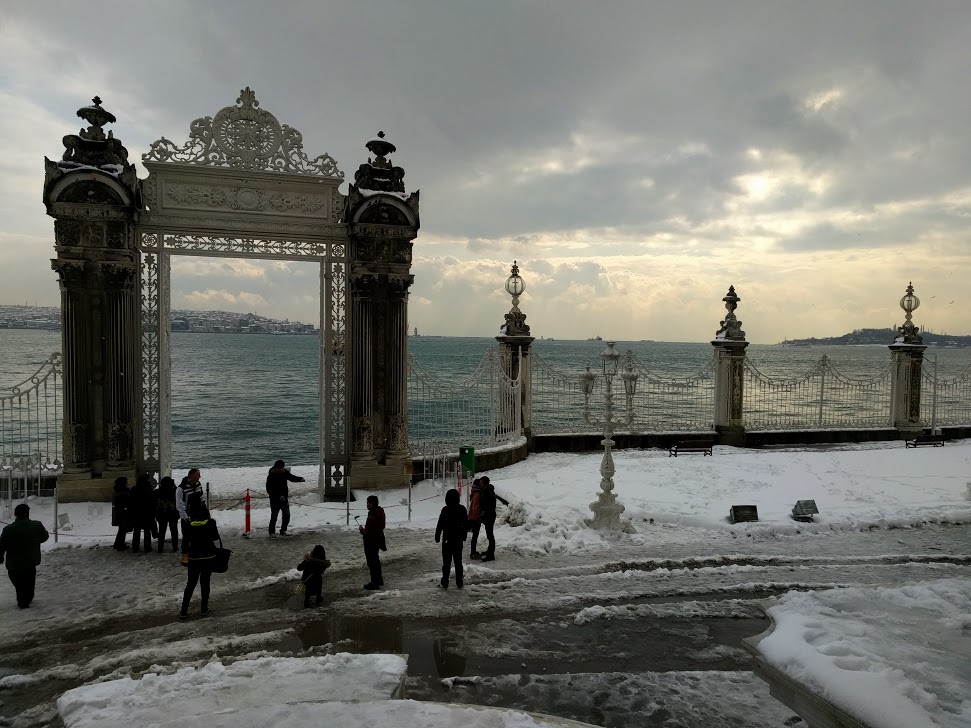
but then Mustafa Kemal Atatürk, the founder of the new Turkish Republic and first president of the Republic of Turkey, used the palace as a presidential residence during the summers. Atatürk also died in the palace, another reason why it’s such a popular place and so important to many Turkish fellows.
We weren’t supposed to take photos inside, but I snuck in a few when the tour guide wasn’t looking or was focused on someone else (or we were crowded together so she wouldn’t notice). The inside was absolutely AMAZING.
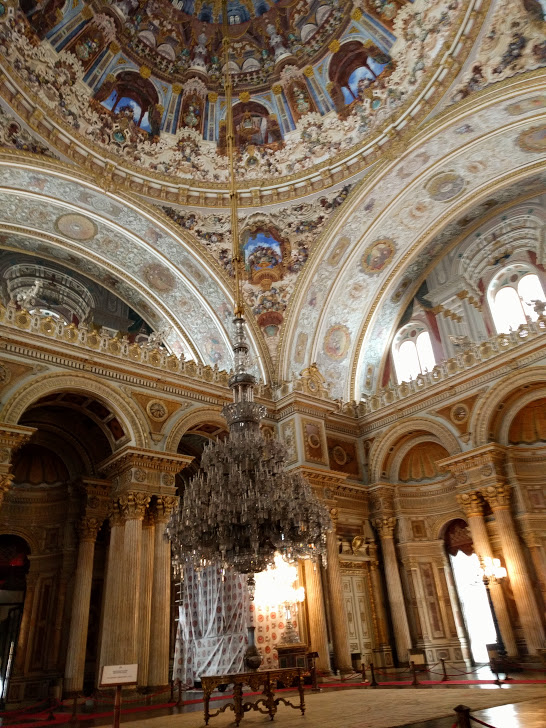
It’s also home to some of the biggest chandeliers in the world (not this one pictured). Pretty amazing.
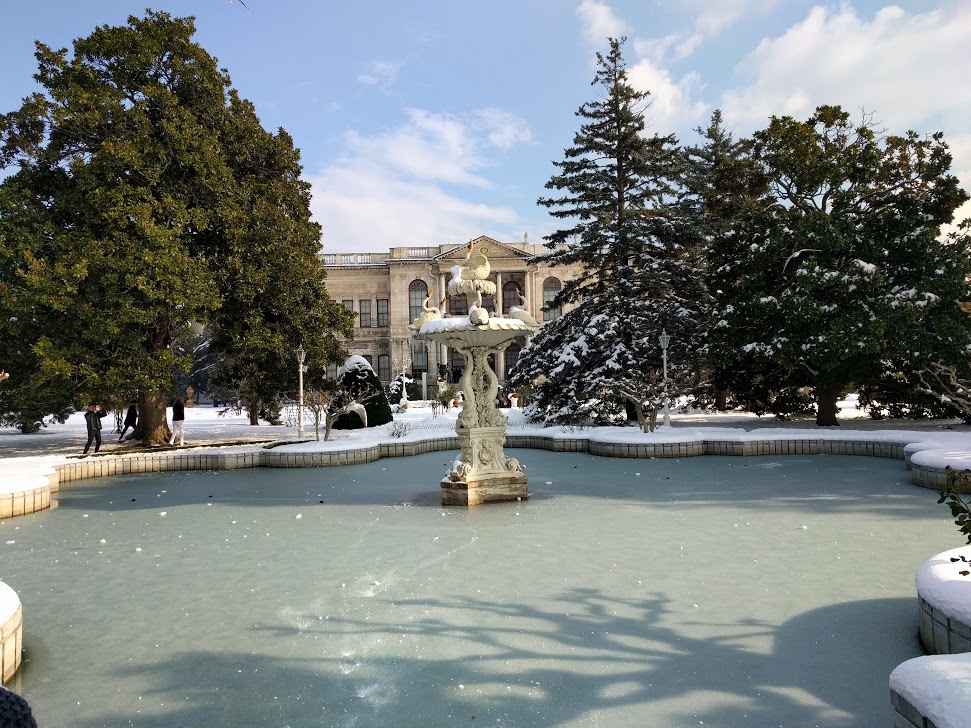
Could I forget the little fountain in the front? That layer of ice was a few inches thick just floating on top and it was fun to mess around with (and almost fall into).
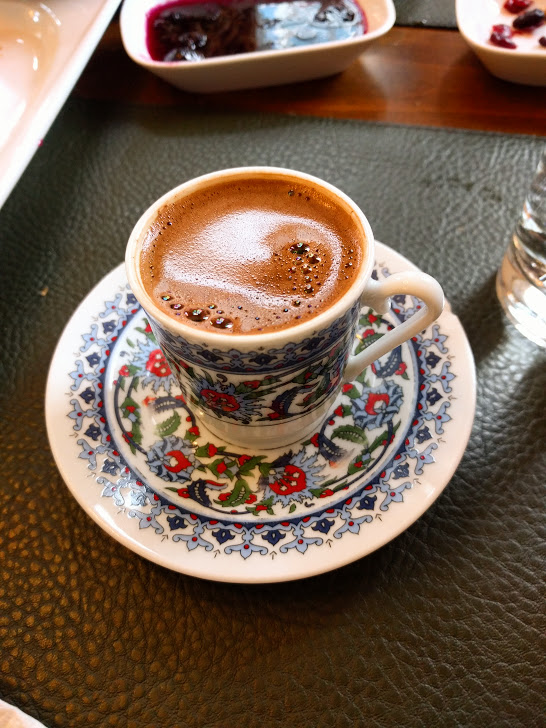
Get some Turkish coffee (and try not to cry)
Turkish coffee is a delicacy. It’s also extremely small and extremely thick, and if you don’t stop drinking soon enough, you’ll be chugging down some thick coffee grounds. I highly recommend trying it.
Get some good food on the Asian side

I can’t remember what this meal was called, but it was amazing. Anything with lavaş bread and Turkish yoghurt (similar to sour cream or greek yoghurt) is good in Turkey.
Go for a walk in the rain
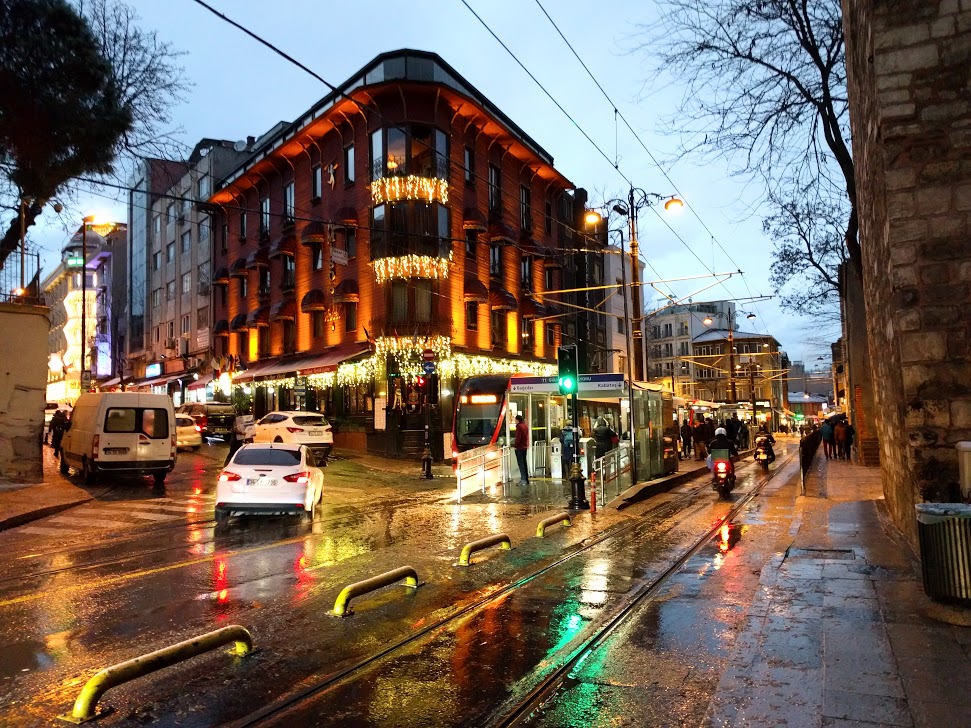
The European side is full of quaint, European looking streets where the metro goes right through the street. The lights reflecting off the ground make it absolutely beautiful and don’t forget to pick up some Turkish ice cream.
The Spice Bazaar
I personally liked the Spice Bazaar better than the famous Grand Bazaar, mainly because they had so much Lokum (Turkish delight). Not the nasty kind you get by the checkout stands at the store, but the authentic, chewy, delicious lokum. Vendors will almost always give you multiple samples and they can also vacuum seal the lokum for you to take on the airplane or boat or train home.
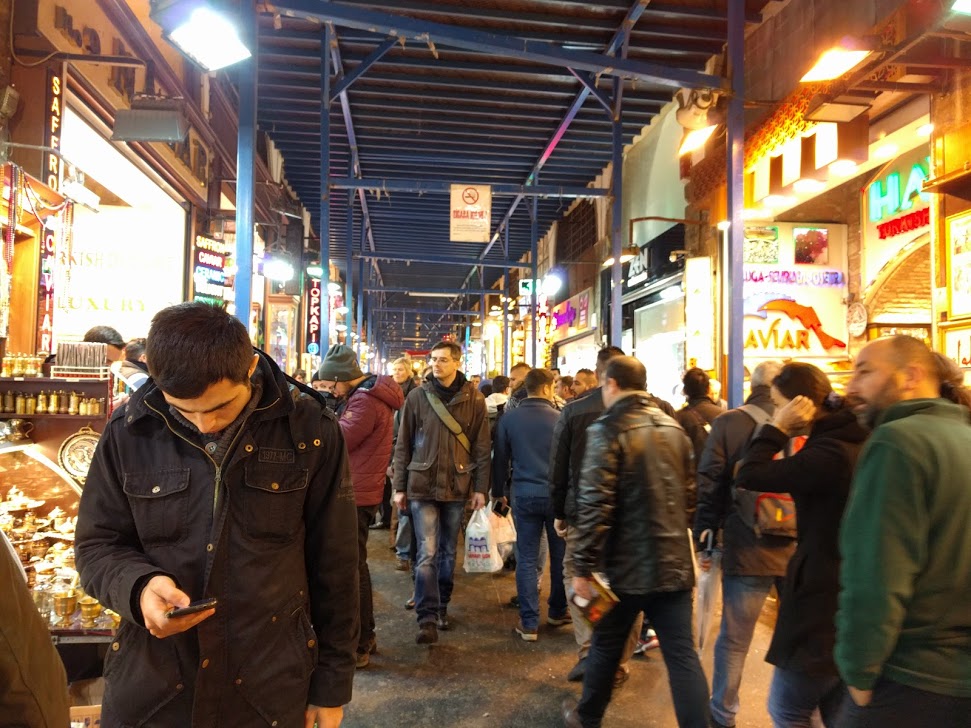
It’s also kind of indoors/covered, and the body heat makes it fairly warm inside. I loved every moment there.
The Grand Bazaar
The Grand Bazaar is really fun and exciting. There is just so much merchandise everywhere, and friendly vendors and salesmen make it another one of those fun cultural experiences.
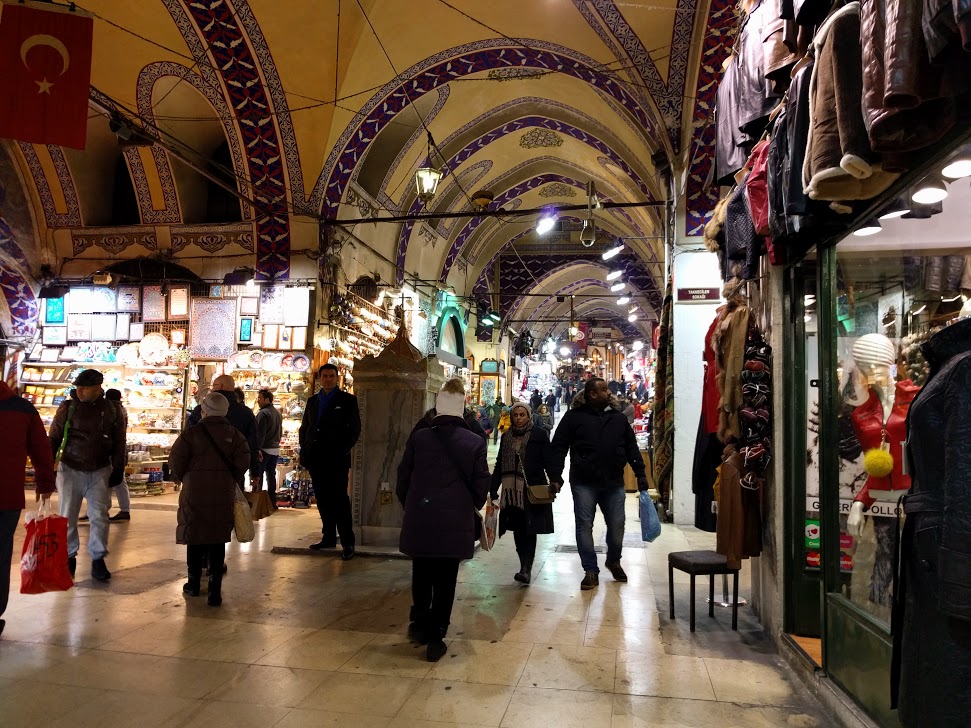
I got a cool Turkish poncho that I wear all the time. However, if you buy one, don’t wear it out and about in Turkey because it’s mainly used by Turkish women at home as a similar use to a robe or blanket.
Büyükada (Island)
Büyükada is the largest of the nine “Princes’ Islands” off the Asian side in Marmara Sea. It’s beautiful and quaint, with Victorian style houses and steep streets (and some horses). At the top of the hilly island is a monastery that has been well preserved (no photos allowed). We rented bikes for super cheap and biked all around the steep streets of Büyükada, and the sunset made it pretty awesome.
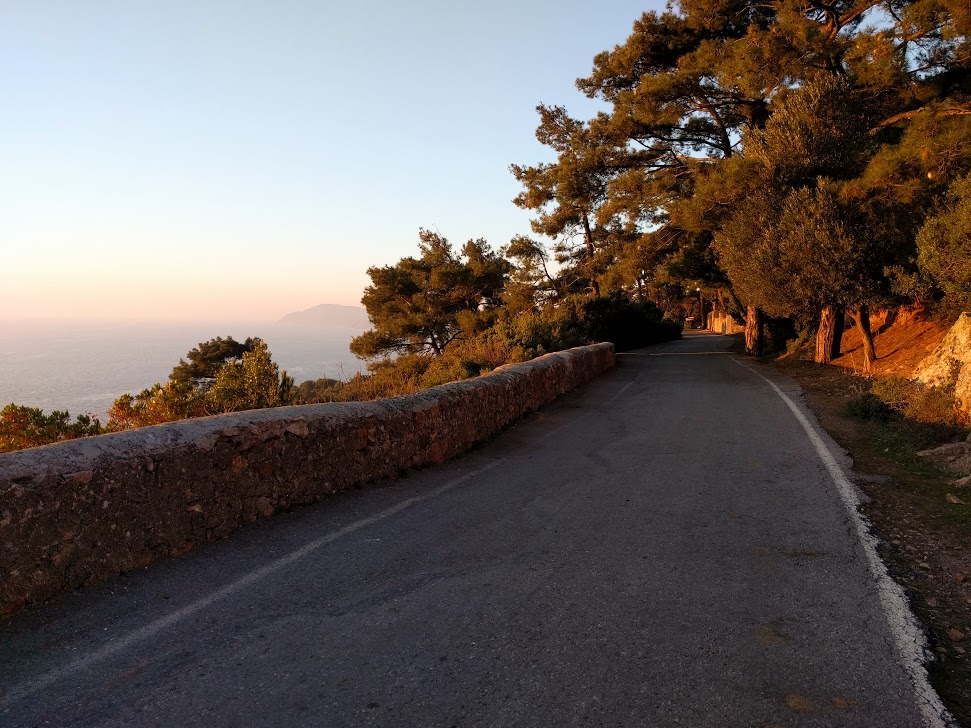
Biking around is pretty fun and you can wander onto some rocks on the edges if you please.
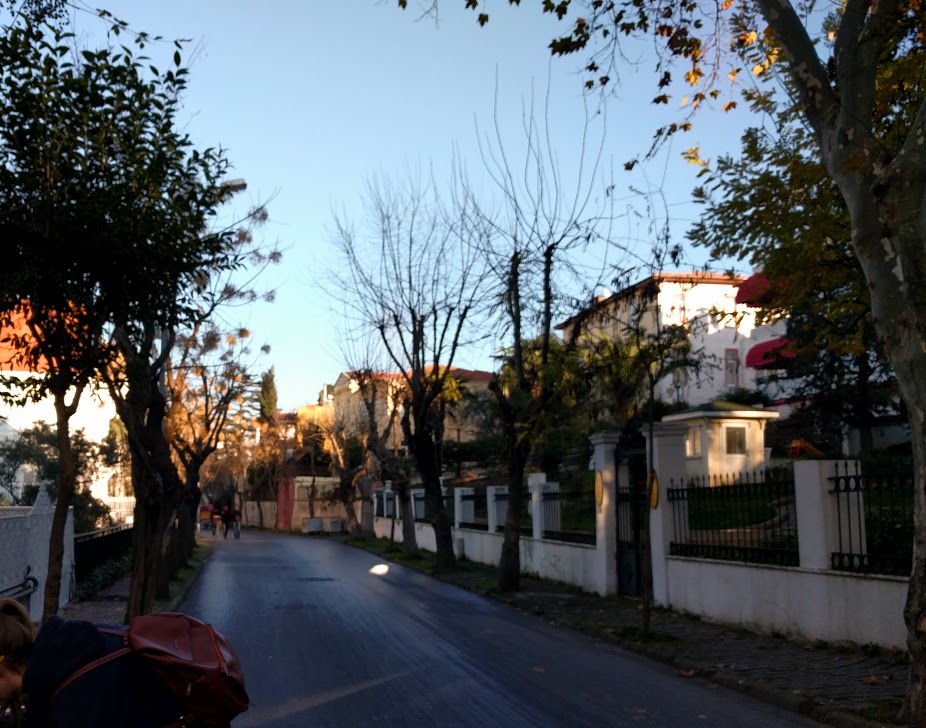
The houses are big and friendly locals make experiences ten times better.
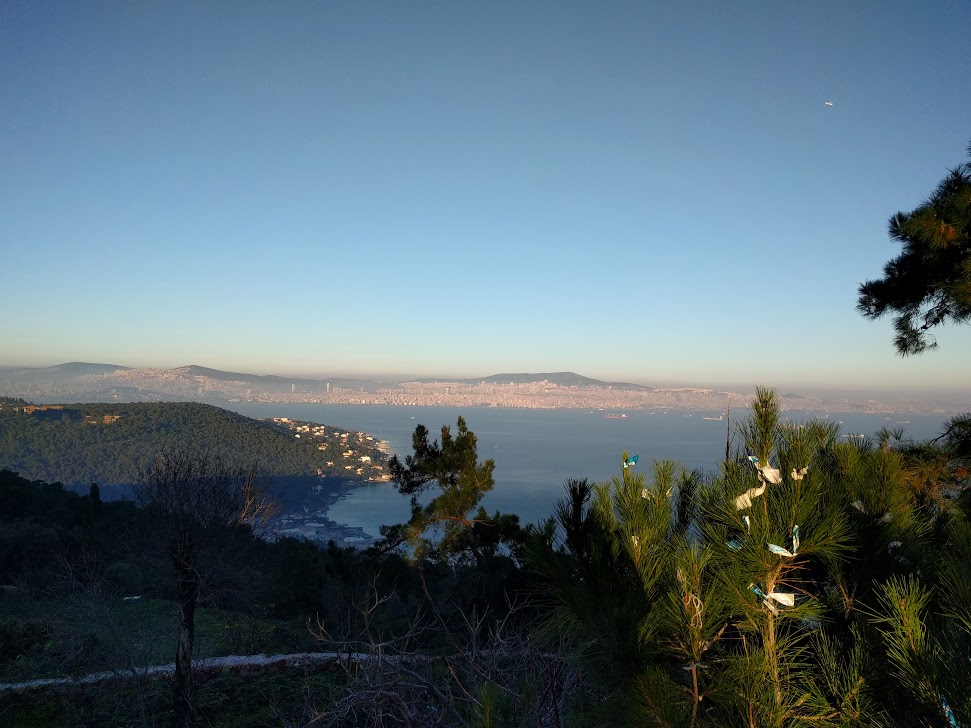
From the top you can see the Asian side of Istanbul in the distance. Istanbul has got some 18 million people and is super crowded, as you can probably see.
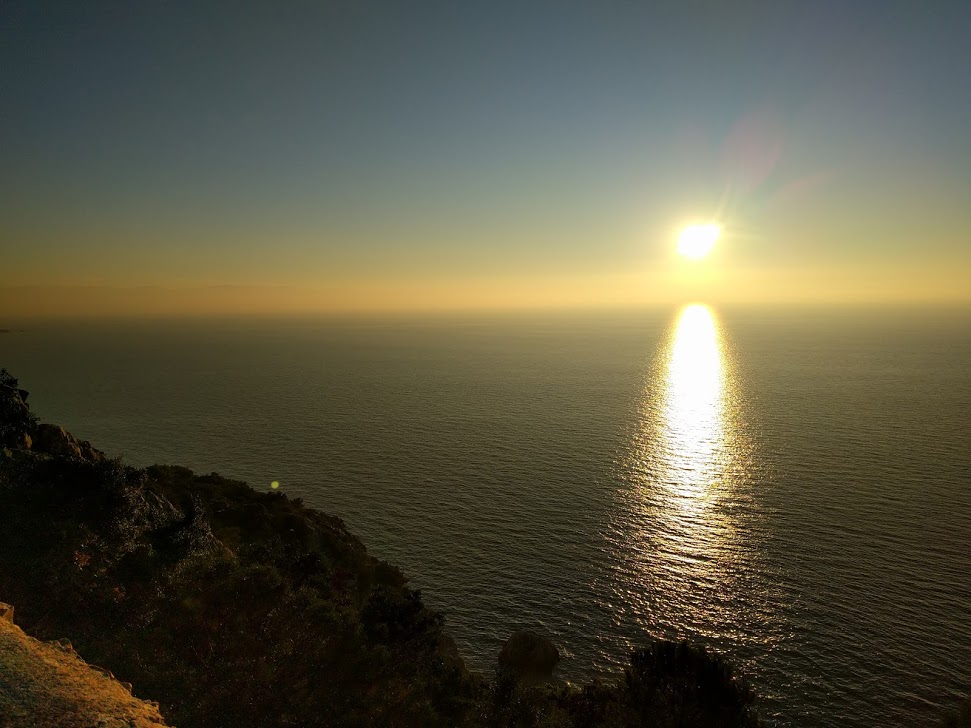
Absolutely beautiful sunset. Turkey in the winter is pretty great. You have this some days, you have winter wonderland other days. It’s the best of both worlds.
—
Istanbul is such a great city to visit, and I know I will be there again one day. I highly recommend visiting in the winter, not just because there are less tourists, but because it also helps when it comes to modesty standards. The locals are really very conservative, and I can imagine they would not appreciate scantily clad women in the hot, Middle East summers. If you do go in the summer, just be aware it’s considered a no-no to have your shoulders uncovered and short shorts on, so just avoid that. For men, I doubt much, if anything, is off limits. The winter is a great time to visit Istanbul, and if you’re lucky and it snows, it’ll be a winter wonderland.

 vibrantcorners.com